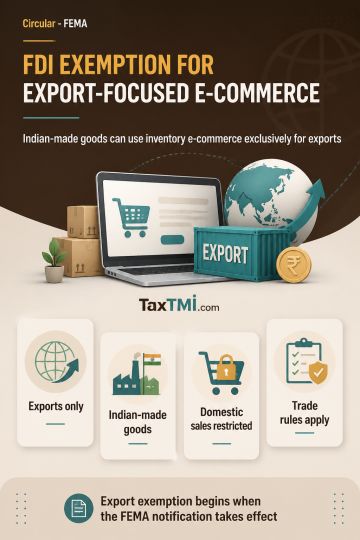
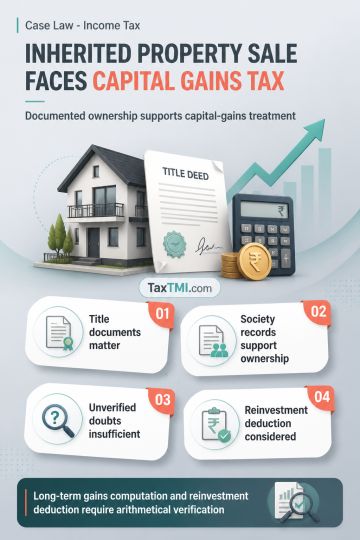
Inherited property sale proceeds require capital-gains treatment where ownership is supported by evidence, not suspicion or unverified signature doubt...
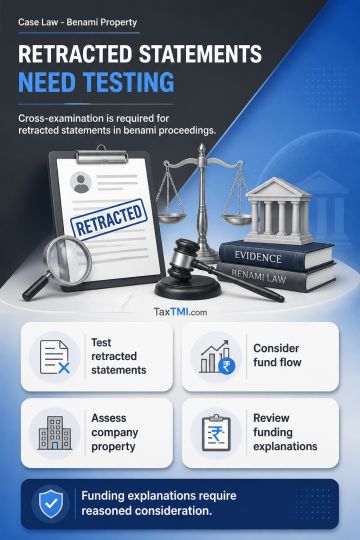
Cross-examination of retracted statements is essential where foundational evidence supports a benami allegation and documented funding explanations re...
Capital-goods exemption covers plant-modernisation accessories, while the import restriction applies only to earlier capital-goods components and spar...
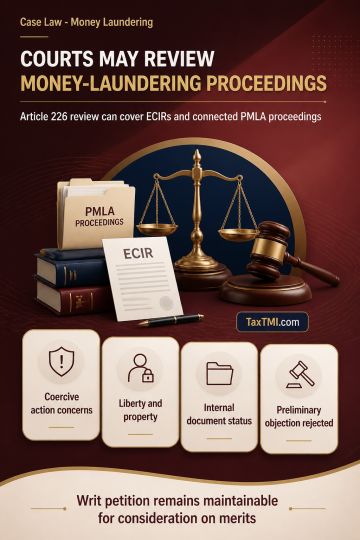
Constitutional judicial review permits challenges to ECIRs and connected money-laundering proceedings where coercive action affects fundamental intere...
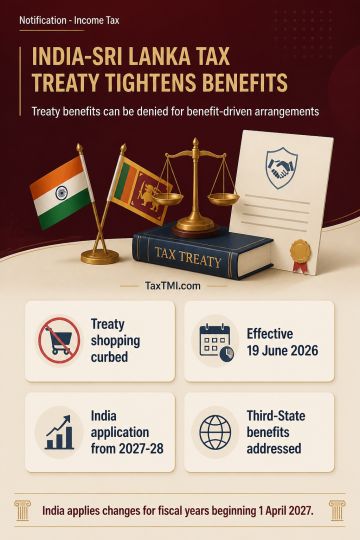
The India-Sri Lanka tax treaty is amended to expressly prevent non-taxation or reduced taxation arising from tax evasion, avoidance and treaty-shopping arrangements that indirectly benefit third-State residents. It also introduces a principal purpose test: treaty benefits may be denied where, considering all relevant facts and circumstances, obtaining the benefit was one of the principal purposes of an arrangement or transaction, unless granting it accords with the object and purpose of the relevant treaty provisions. The Protocol entered into force on 19 June 2026 and applies in India to income derived in fiscal years beginning on or after 1 April 2027.
The India-Sri Lanka tax treaty is amended to expressly prevent non-taxation or reduced taxation arising from tax evasion, avoidance and treaty-shopping arrangements that indirectly benefit third-State residents. It also introduces a principal purpose test: treaty benefits may be denied where, considering all relevant facts and circumstances, obtaining the benefit was one of the principal purposes of an arrangement or transaction, unless granting it accords with the object and purpose of the relevant treaty provisions. The Protocol entered into force on 19 June 2026 and applies in India to income derived in fiscal years beginning on or after 1 April 2027.
Note: It is a system-generated summary and is for quick reference only.
 TaxTMI
 of 4788





 Join Channel


 TaxTMI