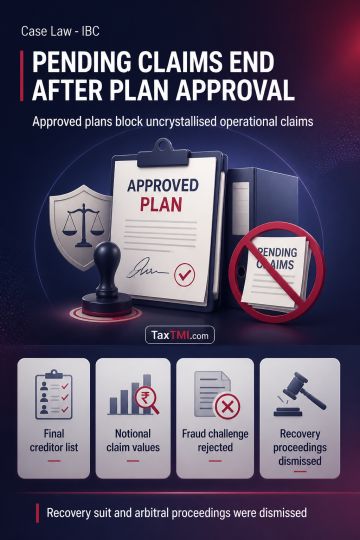
Clean slate principle extinguishes uncrystallised operational claims and bars continuation of pending recovery and arbitral proceedings after plan app...
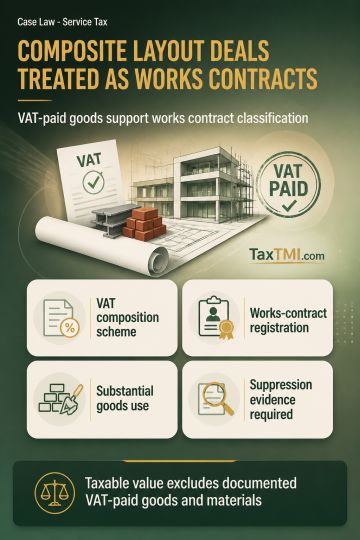
Works contract classification governs composite layout-development contracts where VAT-paid goods are transferred alongside construction and infrastru...
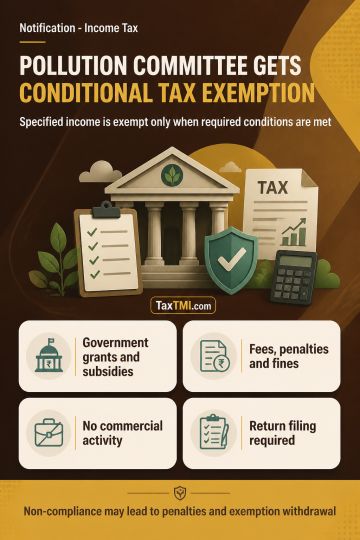
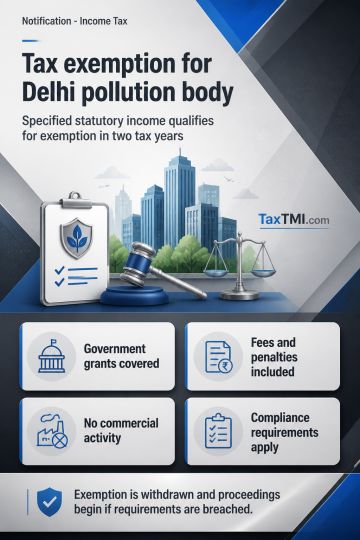
Specified income tax exemption for pollution control body remains conditional on non-commercial activity, unchanged income character, and return filin...
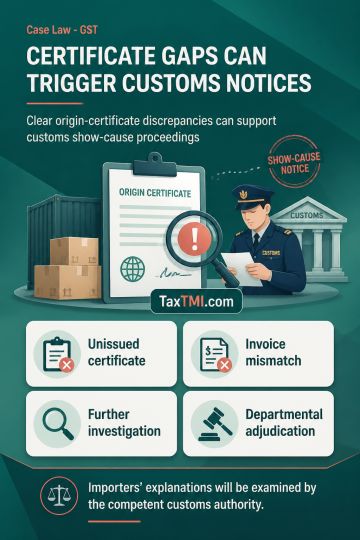
Jurisdictional facts in certificate-of-origin discrepancies can support customs show-cause proceedings, leaving factual explanations for departmental ...
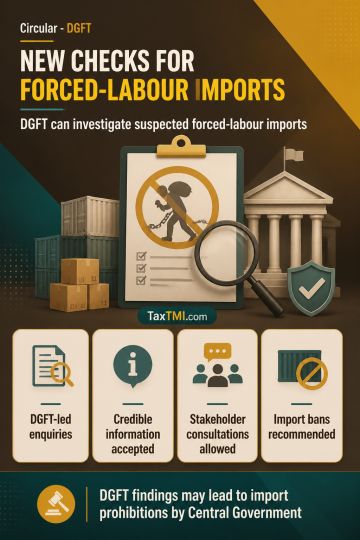
Para 2.50A of the Handbook of Procedures, 2023 establishes a process for determining whether imported goods were produced wholly or partly using forced labour. DGFT may initiate an enquiry on its own motion or on credible information or a supported complaint, obtain information from importers, exporters, manufacturers and other persons, and consult government bodies, stakeholders, international organisations and expert bodies. After completing the enquiry, DGFT must prepare findings and may recommend that the Central Government prohibit imports of goods found to involve forced labour under the foreign trade framework.
Para 2.50A of the Handbook of Procedures, 2023 establishes a process for determining whether imported goods were produced wholly or partly using forced labour. DGFT may initiate an enquiry on its own motion or on credible information or a supported complaint, obtain information from importers, exporters, manufacturers and other persons, and consult government bodies, stakeholders, international organisations and expert bodies. After completing the enquiry, DGFT must prepare findings and may recommend that the Central Government prohibit imports of goods found to involve forced labour under the foreign trade framework.
Note: It is a system-generated summary and is for quick reference only.
 TaxTMI
 of 4782





 Join Channel


 TaxTMI