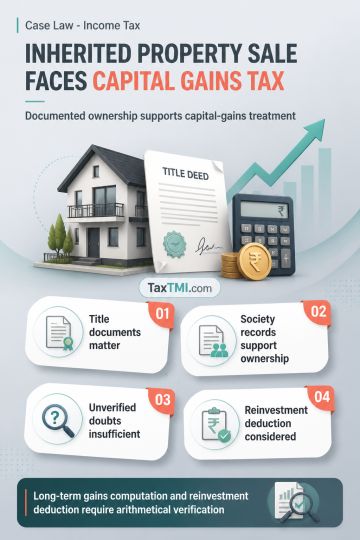
Inherited property sale proceeds require capital-gains treatment where ownership is supported by evidence, not suspicion or unverified signature doubt...
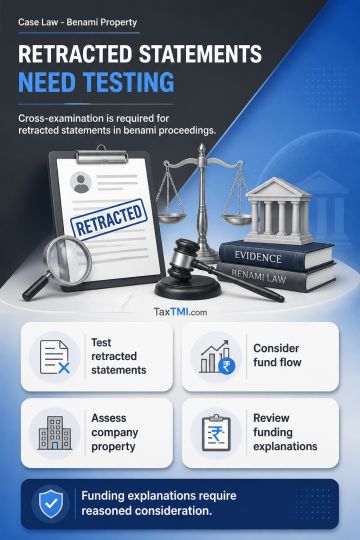
Cross-examination of retracted statements is essential where foundational evidence supports a benami allegation and documented funding explanations re...
Capital-goods exemption covers plant-modernisation accessories, while the import restriction applies only to earlier capital-goods components and spar...
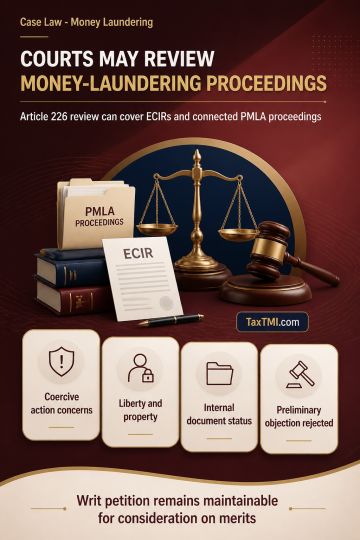
Constitutional judicial review permits challenges to ECIRs and connected money-laundering proceedings where coercive action affects fundamental intere...
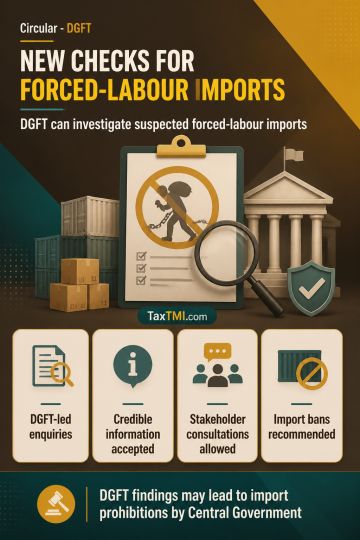
Para 2.50A of the Handbook of Procedures, 2023 establishes a process for determining whether imported goods were produced wholly or partly using forced labour. DGFT may initiate an enquiry on its own motion or on credible information or a supported complaint, obtain information from importers, exporters, manufacturers and other persons, and consult government bodies, stakeholders, international organisations and expert bodies. After completing the enquiry, DGFT must prepare findings and may recommend that the Central Government prohibit imports of goods found to involve forced labour under the foreign trade framework.
Para 2.50A of the Handbook of Procedures, 2023 establishes a process for determining whether imported goods were produced wholly or partly using forced labour. DGFT may initiate an enquiry on its own motion or on credible information or a supported complaint, obtain information from importers, exporters, manufacturers and other persons, and consult government bodies, stakeholders, international organisations and expert bodies. After completing the enquiry, DGFT must prepare findings and may recommend that the Central Government prohibit imports of goods found to involve forced labour under the foreign trade framework.
Note: It is a system-generated summary and is for quick reference only.
 TaxTMI
 of 4792




 Join Channel


 TaxTMI