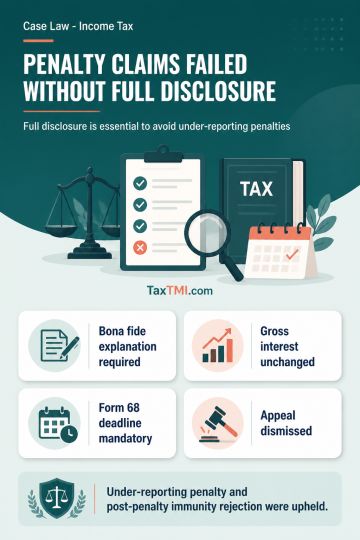
Bona fide disclosure requirements govern under-reporting penalties, and post-penalty immunity applications cannot secure available statutory protectio...
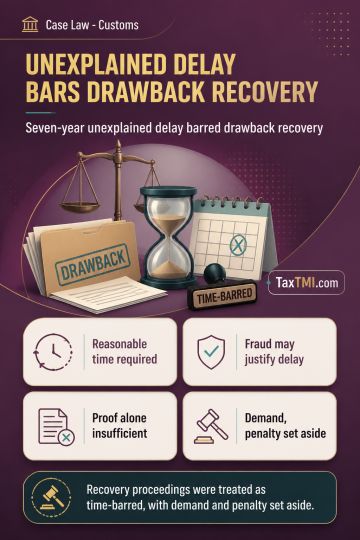
Certificate-of-origin verification procedure governs preferential customs benefits; denial without retroactive verification was set aside with consequ...
Disciplinary Committee jurisdiction and mandatory investigation requirements invalidated cancellation of an insolvency professional's registration and...
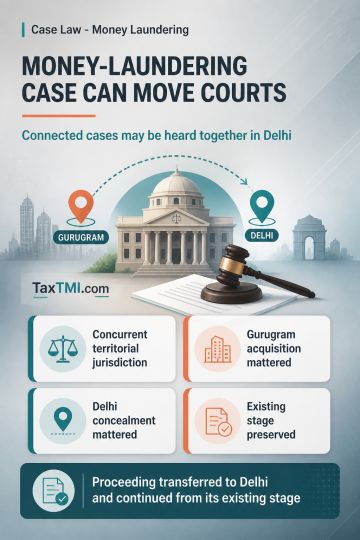
Retention of seized property survives where recorded reasons support proceeds of crime, while stayed investigation periods are excluded from limitatio...
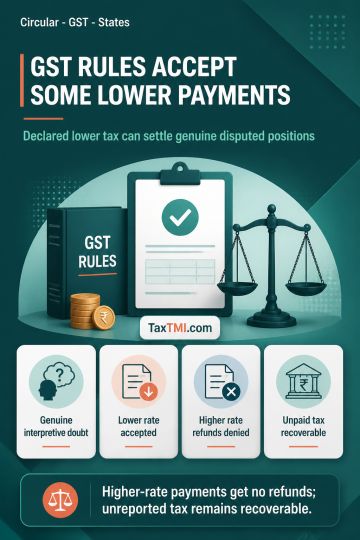
GST regularisation on an "as is" or "as is, where is" basis accepts, as full discharge of liability for the regularised period, tax paid at the lower competing rate or nil rate claimed under a genuinely doubtful exemption entry and declared in returns. Taxpayers who paid a higher rate are not entitled to a refund. The regularisation applies where competing rate entries or divergent interpretations caused genuine doubt; it does not protect cases where no tax was paid when the dispute concerned only competing positive rates. In those cases, tax at the clarified applicable rate remains recoverable.
GST regularisation on an "as is" or "as is, where is" basis accepts, as full discharge of liability for the regularised period, tax paid at the lower competing rate or nil rate claimed under a genuinely doubtful exemption entry and declared in returns. Taxpayers who paid a higher rate are not entitled to a refund. The regularisation applies where competing rate entries or divergent interpretations caused genuine doubt; it does not protect cases where no tax was paid when the dispute concerned only competing positive rates. In those cases, tax at the clarified applicable rate remains recoverable.
Note: It is a system-generated summary and is for quick reference only.
 TaxTMI
 of 4782














 Join Channel


 TaxTMI