Vicarious liability for dishonoured company cheques may extend to non-signatory directors where complaints contain foundational responsibility avermen...
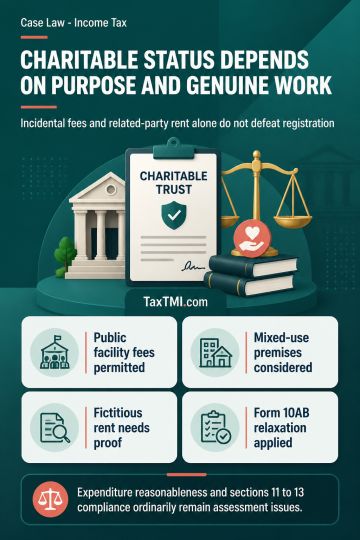
Charitable registration turns on predominant purpose and genuine activities, while incidental fees and related-party rent require supporting adverse m...
MAT book-profit adjustments exclude disallowances for exempt-income expenditure and demerger expenditure unless expressly listed under the statutory c...
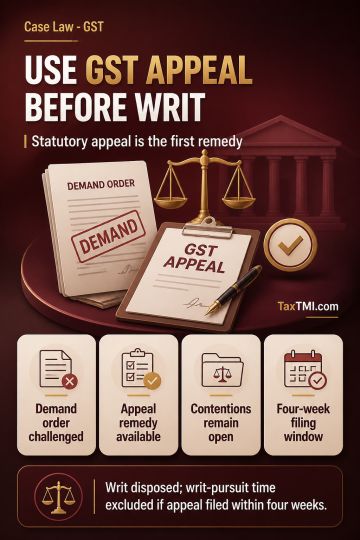
A writ petition challenging a GST demand order without first using the statutory appellate remedy is not maintainable where an efficacious appeal is available under the CGST Act. The High Court directed the petitioner to pursue that remedy, while leaving all contentions open for the Appellate Authority. The petition was disposed of with liberty to file a statutory appeal, and the time spent pursuing the writ proceedings was to be excluded for limitation purposes if the appeal is filed within four weeks.
A writ petition challenging a GST demand order without first using the statutory appellate remedy is not maintainable where an efficacious appeal is available under the CGST Act. The High Court directed the petitioner to pursue that remedy, while leaving all contentions open for the Appellate Authority. The petition was disposed of with liberty to file a statutory appeal, and the time spent pursuing the writ proceedings was to be excluded for limitation purposes if the appeal is filed within four weeks.
Note: It is a system-generated summary and is for quick reference only.
 TaxTMI
 of 4792









 Join Channel


 TaxTMI
