Business expenditure deduction requires proof of genuine commission payments and commercial allowability; turnover growth alone cannot validate the cl...
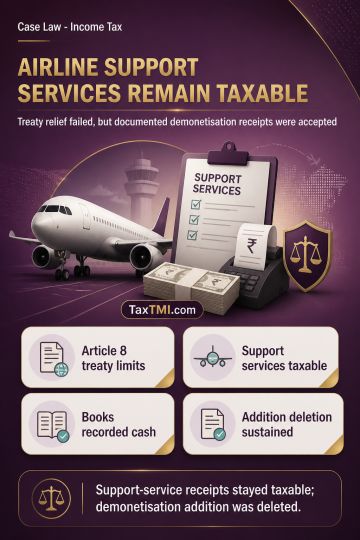
Article 8 treaty coverage excluded third-party airline support services, while documented demonetisation cash receipts remained accepted business inco...
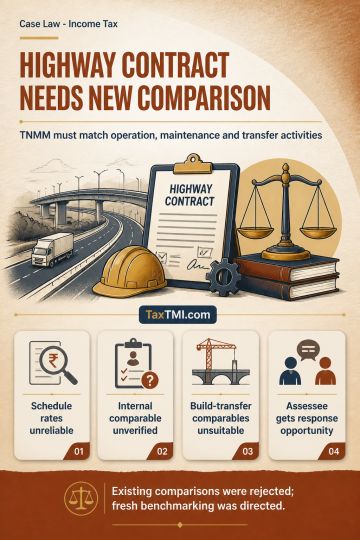
Functional comparability under TNMM requires highway contract benchmarks to reflect operation, maintenance and transfer activities, requiring fresh be...
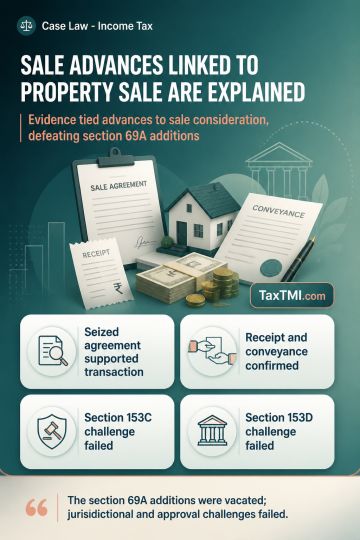
Sale advances supported by a seized agreement, receipt and subsequent conveyance were treated as explained sale consideration rather than unexplained money under section 69A. The notes state that any suppressed consideration would instead be considered under capital gains in the relevant assessment year, and the section 69A additions were vacated. For section 153C, the relevant date for exclusion is stated to be the search initiation date, not later receipt of seized material; the deeming provision is confined to identifying abated assessment years, so the jurisdictional challenge failed. The mechanical-approval challenge under section 153D also failed for lack of cogent supporting material. The consolidated satisfaction-note issue remained open.
Sale advances supported by a seized agreement, receipt and subsequent conveyance were treated as explained sale consideration rather than unexplained money under section 69A. The notes state that any suppressed consideration would instead be considered under capital gains in the relevant assessment year, and the section 69A additions were vacated. For section 153C, the relevant date for exclusion is stated to be the search initiation date, not later receipt of seized material; the deeming provision is confined to identifying abated assessment years, so the jurisdictional challenge failed. The mechanical-approval challenge under section 153D also failed for lack of cogent supporting material. The consolidated satisfaction-note issue remained open.
Note: It is a system-generated summary and is for quick reference only.
 TaxTMI
 of 4788








 Join Channel


 TaxTMI