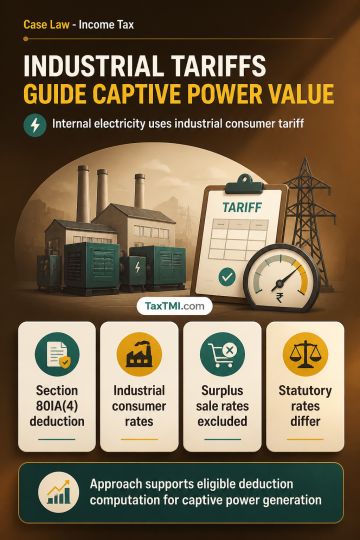
Market value for captive electricity consumption follows industrial consumer tariffs, supporting profit computation for the power generation deduction...
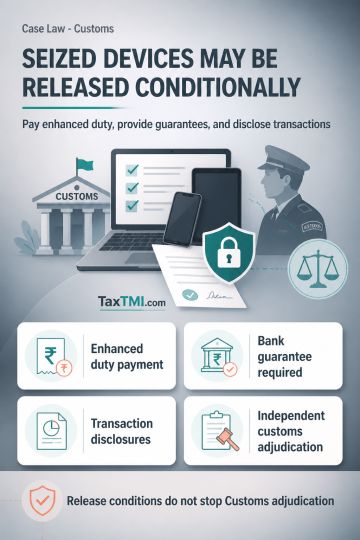
Provisional release of seized imports requires enhanced duty payment, bank guarantee and disclosures while customs adjudication proceeds independently...
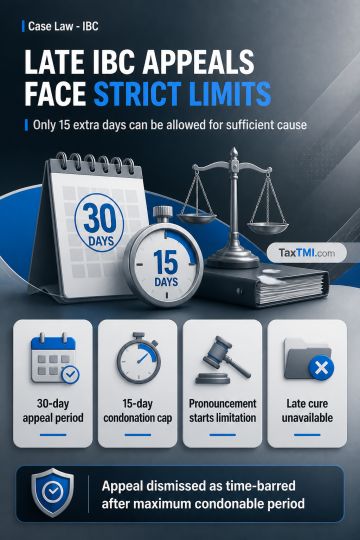
Section 61(2) of the Insolvency and Bankruptcy Code imposes a strict 30-day appeal period, with condonation limited to a further 15 days on sufficient cause; general limitation principles cannot expand this statutory cap. An appeal filed after the initial period without a delay-condonation application is treated as validly instituted only when that application is filed. Where a party participated in the proceedings, limitation runs from pronouncement of the order, while order uploading matters only if no pronouncement occurred on the hearing date. A later condonation application cannot cure filing after the maximum condonable period, resulting in dismissal as time-barred.
Section 61(2) of the Insolvency and Bankruptcy Code imposes a strict 30-day appeal period, with condonation limited to a further 15 days on sufficient cause; general limitation principles cannot expand this statutory cap. An appeal filed after the initial period without a delay-condonation application is treated as validly instituted only when that application is filed. Where a party participated in the proceedings, limitation runs from pronouncement of the order, while order uploading matters only if no pronouncement occurred on the hearing date. A later condonation application cannot cure filing after the maximum condonable period, resulting in dismissal as time-barred.
Note: It is a system-generated summary and is for quick reference only.
 TaxTMI
 of 4782



 Join Channel


 TaxTMI