Condonation of Delay: directoral disputes and pending company proceedings can constitute reasonable cause, allowing a belated return to be treated as ...
Revisionary jurisdiction under section 263 upheld; faceless assessments subject to revision when AO fails requisite enquiries, remitted for fresh asse...
Limited scope of processing under section 143(1): enhancement without show cause is unsustainable; remand for residency, taxation and TDS verification...
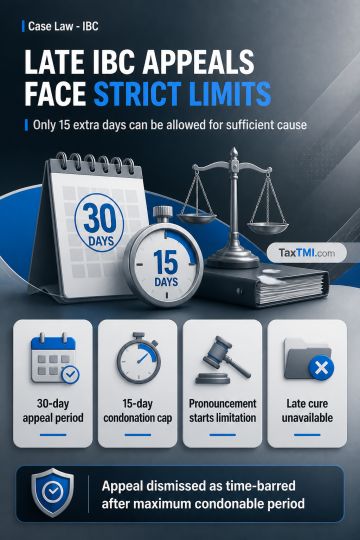
Section 61(2) of the Insolvency and Bankruptcy Code imposes a strict 30-day appeal period, with condonation limited to a further 15 days on sufficient cause; general limitation principles cannot expand this statutory cap. An appeal filed after the initial period without a delay-condonation application is treated as validly instituted only when that application is filed. Where a party participated in the proceedings, limitation runs from pronouncement of the order, while order uploading matters only if no pronouncement occurred on the hearing date. A later condonation application cannot cure filing after the maximum condonable period, resulting in dismissal as time-barred.
Section 61(2) of the Insolvency and Bankruptcy Code imposes a strict 30-day appeal period, with condonation limited to a further 15 days on sufficient cause; general limitation principles cannot expand this statutory cap. An appeal filed after the initial period without a delay-condonation application is treated as validly instituted only when that application is filed. Where a party participated in the proceedings, limitation runs from pronouncement of the order, while order uploading matters only if no pronouncement occurred on the hearing date. A later condonation application cannot cure filing after the maximum condonable period, resulting in dismissal as time-barred.
Note: It is a system-generated summary and is for quick reference only.
 TaxTMI
  TaxTMI
 of 4824


 Join Channel