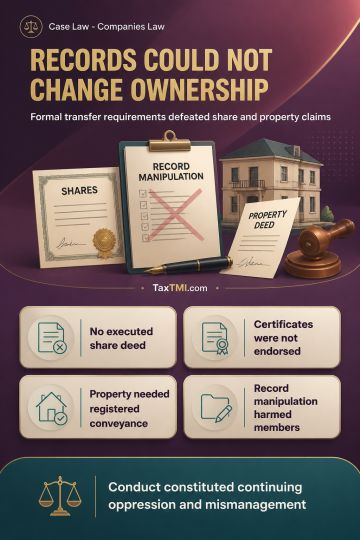
Statutory transfer formalities invalidated alleged share and property transfers, while retrospective record manipulation constituted oppression and mi...
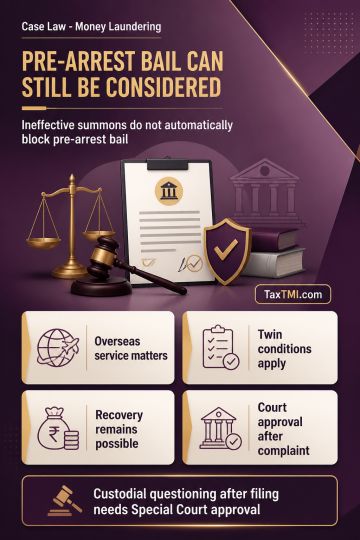
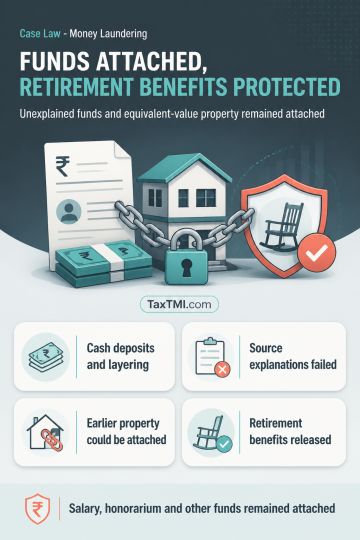
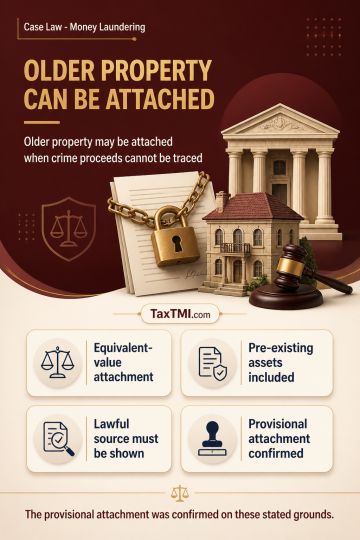
Provisional attachment of laundered funds and equivalent-value property sustained, with statutory protection limited to pension, gratuity and providen...
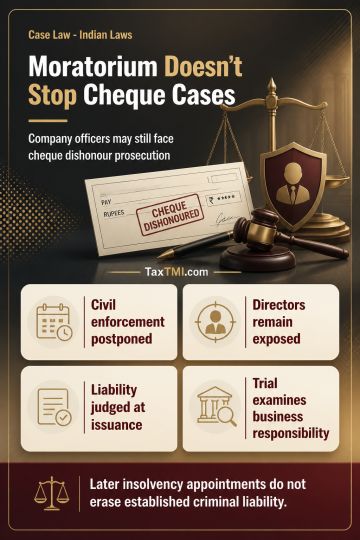
Insolvency moratorium does not shield company officers from cheque dishonour prosecution for liability arising before corporate insolvency proceedings...
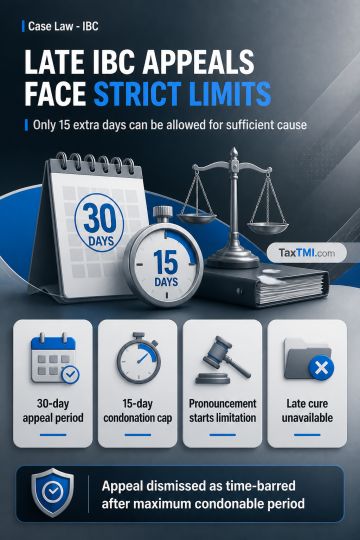
Section 61(2) of the Insolvency and Bankruptcy Code imposes a strict 30-day appeal period, with condonation limited to a further 15 days on sufficient cause; general limitation principles cannot expand this statutory cap. An appeal filed after the initial period without a delay-condonation application is treated as validly instituted only when that application is filed. Where a party participated in the proceedings, limitation runs from pronouncement of the order, while order uploading matters only if no pronouncement occurred on the hearing date. A later condonation application cannot cure filing after the maximum condonable period, resulting in dismissal as time-barred.
Section 61(2) of the Insolvency and Bankruptcy Code imposes a strict 30-day appeal period, with condonation limited to a further 15 days on sufficient cause; general limitation principles cannot expand this statutory cap. An appeal filed after the initial period without a delay-condonation application is treated as validly instituted only when that application is filed. Where a party participated in the proceedings, limitation runs from pronouncement of the order, while order uploading matters only if no pronouncement occurred on the hearing date. A later condonation application cannot cure filing after the maximum condonable period, resulting in dismissal as time-barred.
Note: It is a system-generated summary and is for quick reference only.
 TaxTMI
 of 4782





 Join Channel


 TaxTMI