Necessary-party requirements limit impleadment of independent entities, while deferred consideration does not create an appealable adverse determinati...
Food supplement classification requires common parlance and authoritative tests, preventing treatment as proprietary Ayurvedic medicines without suppo...
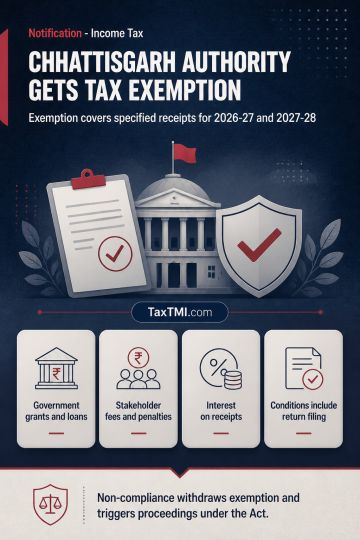
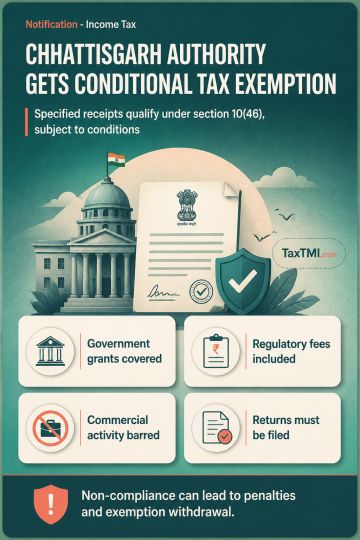
Specified regulatory authority income receives conditional tax exemption, subject to non-commercial activity, unchanged income character, and return f...
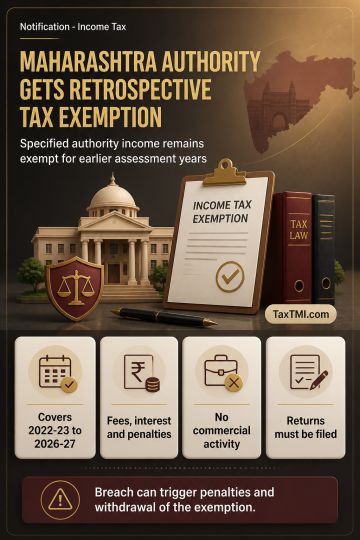
Tax exemption for regulatory authority income applies retrospectively, subject to non-commercial activity, unchanged income sources, and return-filing...
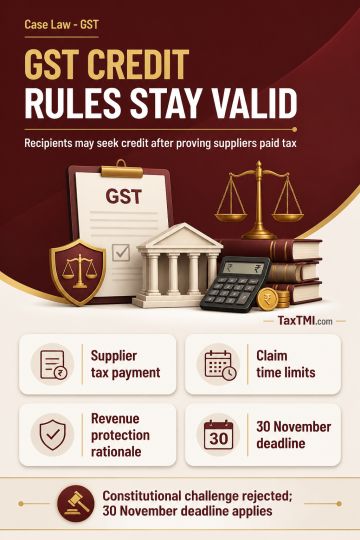
Input tax credit conditions remain constitutionally valid, with eligible recipient claims considered under GST circulars and retrospective filing dead...
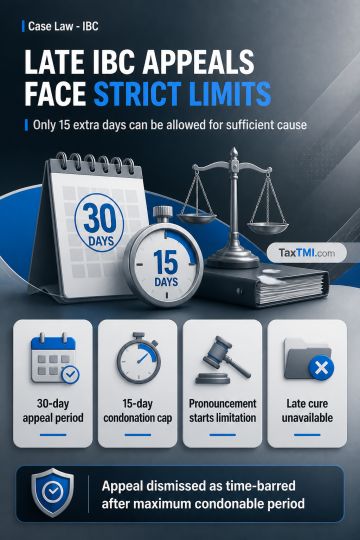
Section 61(2) of the Insolvency and Bankruptcy Code imposes a strict 30-day appeal period, with condonation limited to a further 15 days on sufficient cause; general limitation principles cannot expand this statutory cap. An appeal filed after the initial period without a delay-condonation application is treated as validly instituted only when that application is filed. Where a party participated in the proceedings, limitation runs from pronouncement of the order, while order uploading matters only if no pronouncement occurred on the hearing date. A later condonation application cannot cure filing after the maximum condonable period, resulting in dismissal as time-barred.
Section 61(2) of the Insolvency and Bankruptcy Code imposes a strict 30-day appeal period, with condonation limited to a further 15 days on sufficient cause; general limitation principles cannot expand this statutory cap. An appeal filed after the initial period without a delay-condonation application is treated as validly instituted only when that application is filed. Where a party participated in the proceedings, limitation runs from pronouncement of the order, while order uploading matters only if no pronouncement occurred on the hearing date. A later condonation application cannot cure filing after the maximum condonable period, resulting in dismissal as time-barred.
Note: It is a system-generated summary and is for quick reference only.
 TaxTMI
 of 4784















 Join Channel


 TaxTMI