Transaction value rejection requires reliable corroboration; refundable VAT is excluded and temporary registration does not defeat new-vehicle exempti...
Appellate jurisdiction remains available where a wrist-worn gold ornament cannot conclusively be characterised as imported baggage at the preliminary ...
Written complaint requirement bars cognizance on police reports for securities offences, while unsupported breach of trust and cheating allegations fa...
Risk-based postal import clearance standardises electronic assessment, document requests, duty realisation and delivery controls at Foreign Post Offic...
Customs Cargo Service Provider appointment extends custodianship to additional terminal land, subject to cargo-control, security and licence condition...
Page of 4790
Press 'Enter' after typing page number.
141 to 160 of 95794 Results
❮
❯
❯❯
0 / 200
Expand Note
Add to Folder
No Folders have been created
+
Are you sure you want to delete "My most important" ?
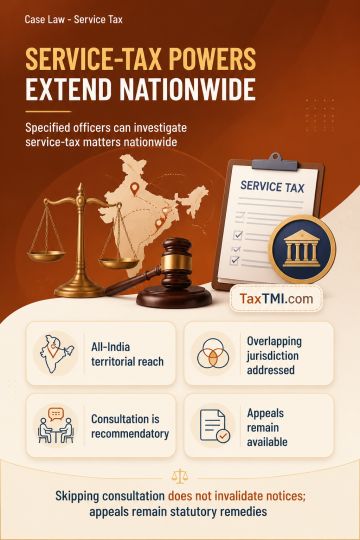
Pan-India jurisdiction of specified Central Excise Officers for service-tax investigations is examined through the meaning of "local limits" under the Service Tax Rules. The notes explain that the Board's power to appoint and invest officers under Chapter V of the Finance Act, 1994 can extend to all-India territorial limits, and that later notifications do not curtail independently conferred powers. They also address overlapping jurisdiction, requiring the specified adjudicating authority to proceed with the relevant show-cause notice. Pre-show-cause-notice consultation under the departmental Master Circular is described as recommendatory rather than mandatory, so its omission does not invalidate notices; factual challenges to original orders remain subject to statutory appellate remedies.
Pan-India jurisdiction of specified Central Excise Officers for service-tax investigations is examined through the meaning of "local limits" under the Service Tax Rules. The notes explain that the Board's power to appoint and invest officers under Chapter V of the Finance Act, 1994 can extend to all-India territorial limits, and that later notifications do not curtail independently conferred powers. They also address overlapping jurisdiction, requiring the specified adjudicating authority to proceed with the relevant show-cause notice. Pre-show-cause-notice consultation under the departmental Master Circular is described as recommendatory rather than mandatory, so its omission does not invalidate notices; factual challenges to original orders remain subject to statutory appellate remedies.
Note: It is a system-generated summary and is for quick reference only.
 TaxTMI
 of 4790


















 Join Channel


 TaxTMI