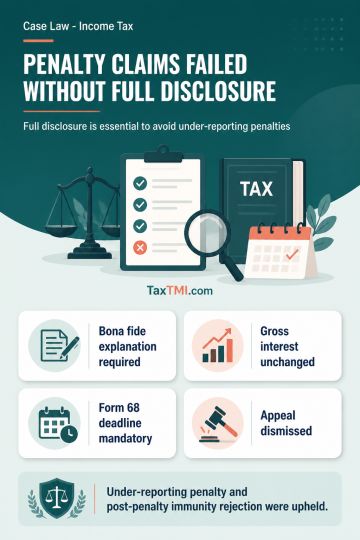
Bona fide disclosure requirements govern under-reporting penalties, and post-penalty immunity applications cannot secure available statutory protectio...
Certificate-of-origin verification procedure governs preferential customs benefits; denial without retroactive verification was set aside with consequ...
Disciplinary Committee jurisdiction and mandatory investigation requirements invalidated cancellation of an insolvency professional's registration and...
Retention of seized property survives where recorded reasons support proceeds of crime, while stayed investigation periods are excluded from limitatio...
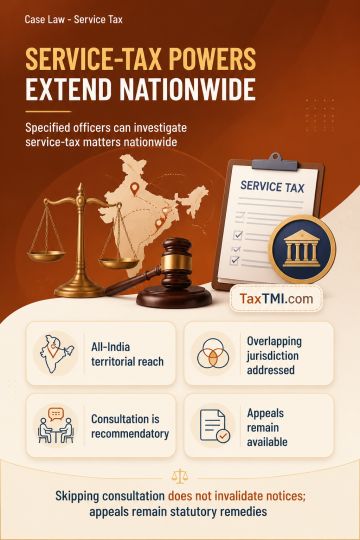
Pan-India jurisdiction of specified Central Excise Officers for service-tax investigations is examined through the meaning of "local limits" under the Service Tax Rules. The notes explain that the Board's power to appoint and invest officers under Chapter V of the Finance Act, 1994 can extend to all-India territorial limits, and that later notifications do not curtail independently conferred powers. They also address overlapping jurisdiction, requiring the specified adjudicating authority to proceed with the relevant show-cause notice. Pre-show-cause-notice consultation under the departmental Master Circular is described as recommendatory rather than mandatory, so its omission does not invalidate notices; factual challenges to original orders remain subject to statutory appellate remedies.
Pan-India jurisdiction of specified Central Excise Officers for service-tax investigations is examined through the meaning of "local limits" under the Service Tax Rules. The notes explain that the Board's power to appoint and invest officers under Chapter V of the Finance Act, 1994 can extend to all-India territorial limits, and that later notifications do not curtail independently conferred powers. They also address overlapping jurisdiction, requiring the specified adjudicating authority to proceed with the relevant show-cause notice. Pre-show-cause-notice consultation under the departmental Master Circular is described as recommendatory rather than mandatory, so its omission does not invalidate notices; factual challenges to original orders remain subject to statutory appellate remedies.
Note: It is a system-generated summary and is for quick reference only.
 TaxTMI
 of 4782














 Join Channel


 TaxTMI