Arrest safeguards and transit remand requirements invalidated detention following inter-State transfer without communicated grounds or magistrate auth...
Arrest safeguards require disclosed grounds, relative intimation and transit remand, while duplicate prosecution under the CGST framework is unsustain...
Document Identification Number defects can invalidate GST assessments, with delayed challenges entertained conditionally where patent irregularities e...
Windmill commissioning evidence supported higher depreciation where grid connection and electricity generation proved operational use before the relev...
Pharmaceutical promotion and transfer-pricing comparability principles limited disallowances, while uncorroborated search allegations and unsupported ...
Business expenditure substantiation supports scrap credits, statutory payments and expense claims, while depreciation requires proof of actual busines...
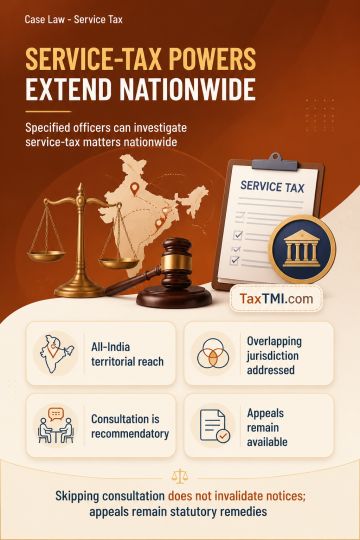
Pan-India jurisdiction of specified Central Excise Officers for service-tax investigations is examined through the meaning of "local limits" under the Service Tax Rules. The notes explain that the Board's power to appoint and invest officers under Chapter V of the Finance Act, 1994 can extend to all-India territorial limits, and that later notifications do not curtail independently conferred powers. They also address overlapping jurisdiction, requiring the specified adjudicating authority to proceed with the relevant show-cause notice. Pre-show-cause-notice consultation under the departmental Master Circular is described as recommendatory rather than mandatory, so its omission does not invalidate notices; factual challenges to original orders remain subject to statutory appellate remedies.
Pan-India jurisdiction of specified Central Excise Officers for service-tax investigations is examined through the meaning of "local limits" under the Service Tax Rules. The notes explain that the Board's power to appoint and invest officers under Chapter V of the Finance Act, 1994 can extend to all-India territorial limits, and that later notifications do not curtail independently conferred powers. They also address overlapping jurisdiction, requiring the specified adjudicating authority to proceed with the relevant show-cause notice. Pre-show-cause-notice consultation under the departmental Master Circular is described as recommendatory rather than mandatory, so its omission does not invalidate notices; factual challenges to original orders remain subject to statutory appellate remedies.
Note: It is a system-generated summary and is for quick reference only.
 TaxTMI
 of 4784




















 Join Channel


 TaxTMI