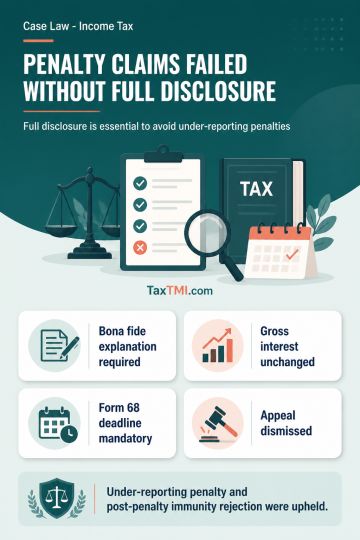
Bona fide disclosure requirements govern under-reporting penalties, and post-penalty immunity applications cannot secure available statutory protectio...
Certificate-of-origin verification procedure governs preferential customs benefits; denial without retroactive verification was set aside with consequ...
Disciplinary Committee jurisdiction and mandatory investigation requirements invalidated cancellation of an insolvency professional's registration and...
Retention of seized property survives where recorded reasons support proceeds of crime, while stayed investigation periods are excluded from limitatio...
Separate assessment orders for different assessment years may be...
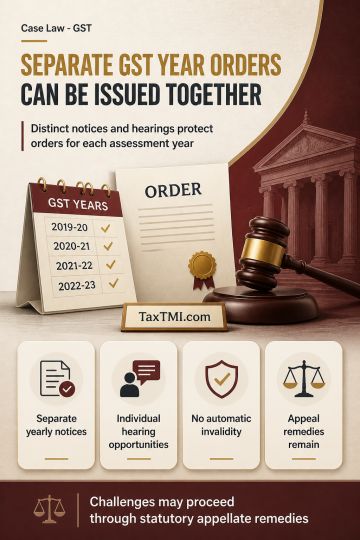
Separate assessment orders for different years remain valid when distinct notices and hearing opportunities prevent prejudice from combined proceedings
Contents
Summary
Note
Bookmark
Share
✓ Copied successfully !
Print
Print Options
For full text, please login
Login to TaxTMI
Verification Pending
The Email Id has not been verified. Click on the link we have sent on
Separate assessment orders for different assessment years may be issued simultaneously where each year is supported by a separate notice and separate opportunity to respond. The absence of a statutory prohibition means simultaneous issuance does not, by itself, invalidate the orders. The restriction on composite notices and common assessment orders is directed at preventing prejudice from combining proceedings across years, not at prohibiting coordinated issuance of distinct orders. Accordingly, simultaneous separate orders do not warrant interference, while substantive challenges remain subject to the available statutory appellate remedies.
Separate assessment orders for different assessment years may be issued simultaneously where each year is supported by a separate notice and separate opportunity to respond. The absence of a statutory prohibition means simultaneous issuance does not, by itself, invalidate the orders. The restriction on composite notices and common assessment orders is directed at preventing prejudice from combining proceedings across years, not at prohibiting coordinated issuance of distinct orders. Accordingly, simultaneous separate orders do not warrant interference, while substantive challenges remain subject to the available statutory appellate remedies.
Note: It is a system-generated summary and is for quick reference only.
 TaxTMI
 of 4782















 Join Channel


 TaxTMI