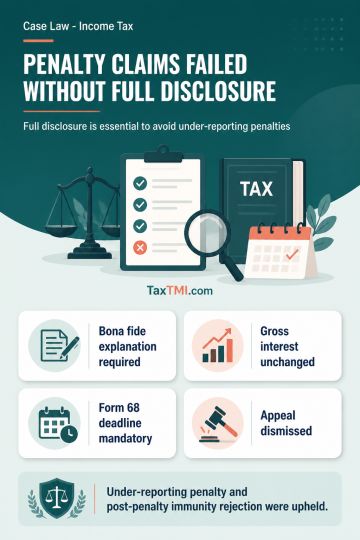
Bona fide disclosure requirements govern under-reporting penalties, and post-penalty immunity applications cannot secure available statutory protectio...
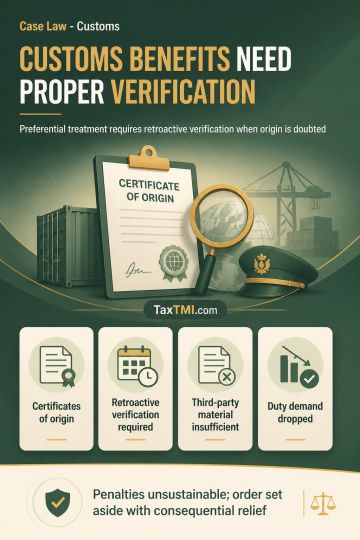
Certificate-of-origin verification procedure governs preferential customs benefits; denial without retroactive verification was set aside with consequ...
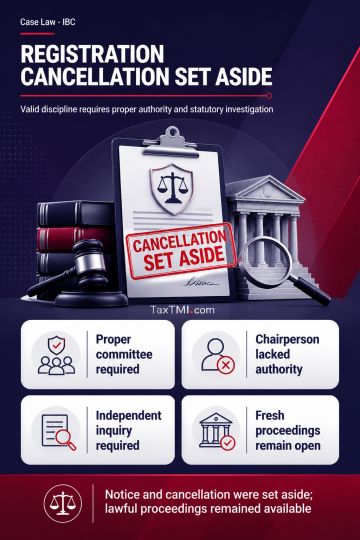
Disciplinary Committee jurisdiction and mandatory investigation requirements invalidated cancellation of an insolvency professional's registration and...
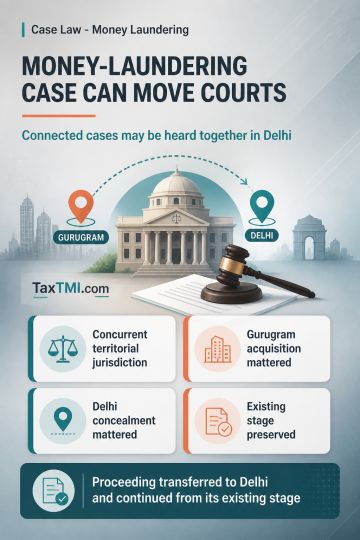
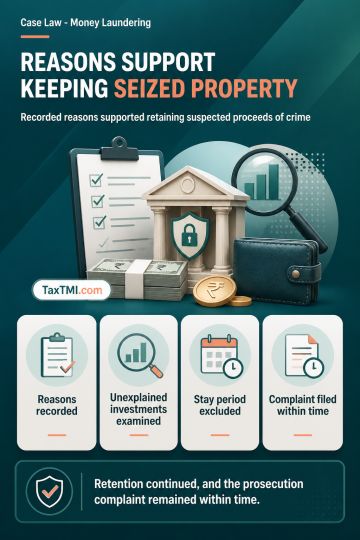
Retention of seized property survives where recorded reasons support proceeds of crime, while stayed investigation periods are excluded from limitatio...
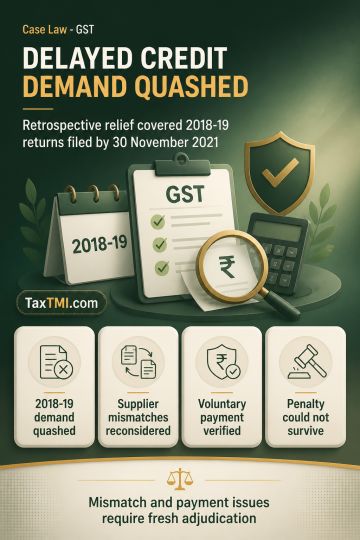
Retrospective relaxation of the time limit for claiming input tax credit under section 16(5) can remove the section 16(4) impediment where returns for the relevant period were filed by 30 November 2021; accordingly, the delayed-availment demand for 2018-19 was quashed. Alleged GST short payment and excess credit arising from supplier-return mismatches require factual reconsideration, including verification of claimed voluntary payment and asserted insolvency proceedings involving the service provider. Consequential enhanced penalty depends on the surviving demand and therefore could not be sustained while the remaining issues required fresh adjudication.
Retrospective relaxation of the time limit for claiming input tax credit under section 16(5) can remove the section 16(4) impediment where returns for the relevant period were filed by 30 November 2021; accordingly, the delayed-availment demand for 2018-19 was quashed. Alleged GST short payment and excess credit arising from supplier-return mismatches require factual reconsideration, including verification of claimed voluntary payment and asserted insolvency proceedings involving the service provider. Consequential enhanced penalty depends on the surviving demand and therefore could not be sustained while the remaining issues required fresh adjudication.
Note: It is a system-generated summary and is for quick reference only.
 TaxTMI
 of 4782




 Join Channel


 TaxTMI