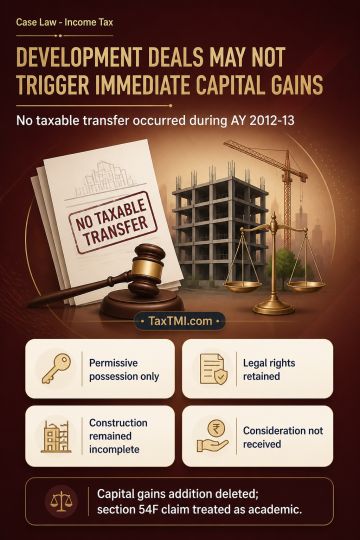
Development agreements require legal possession or effective enjoyment for capital gains transfer; permissive possession and deferred consideration de...
Prolonged sterilisation of development rights supports capital-gains treatment, while business-income disallowances cannot govern capital-gains comput...
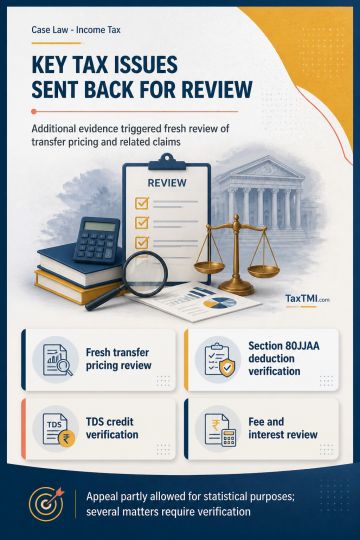
Additional evidence in transfer pricing dispute leads to fresh examination, while tax deductions, TDS credit, fee and refund interest require verifica...
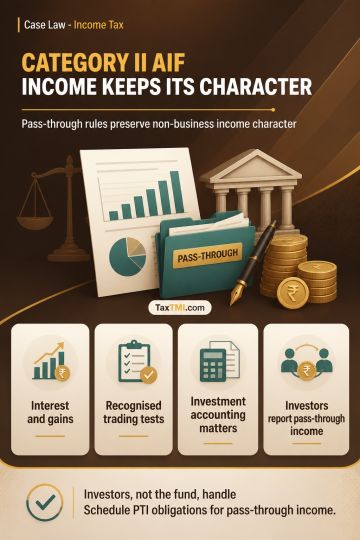
Category II AIF pass-through taxation preserves non-business income character; investment receipts cannot be reclassified without applying recognised ...
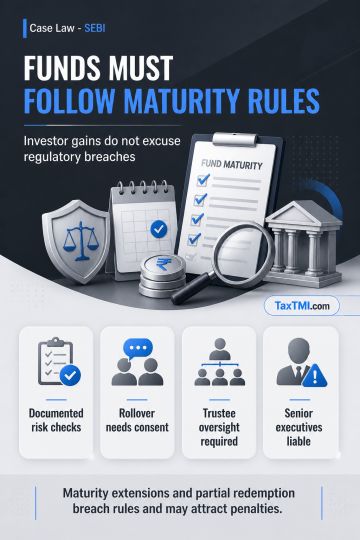
Mutual fund maturity rules require proper rollover, redemption, disclosure, and due diligence; investor gains cannot excuse regulatory breaches or pen...
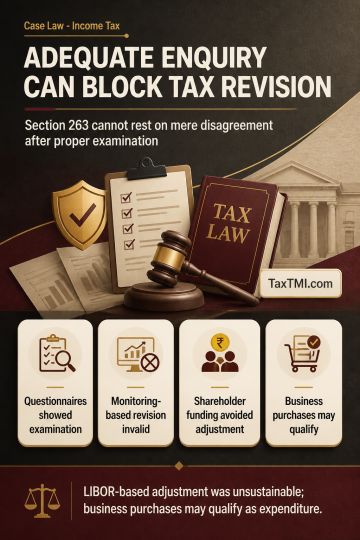
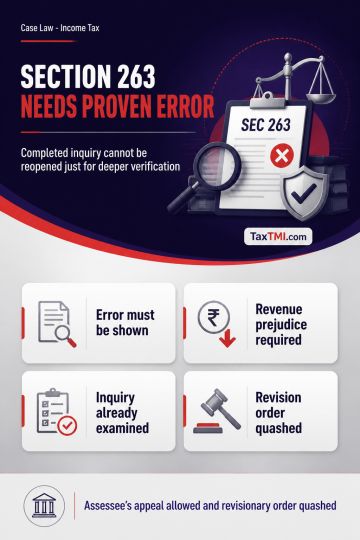
Revision under section 263 requires the assessment order to be both erroneous and prejudicial to the interests of the Revenue. The distinction between lack of inquiry and inadequate inquiry is material: where the Assessing Officer has examined relevant expenses, related-party payments, GST-exempt services, financial records, returns, GST details, TDS particulars and supplier-level material, revision cannot be based merely on a view that further verification was desirable. The revisional authority must identify an actual error from the assessment record and demonstrate resulting prejudice; it cannot order a fresh investigation without establishing both statutory conditions. The stated result was quashing of the revisionary order and allowance of the assessee's appeal.
Revision under section 263 requires the assessment order to be both erroneous and prejudicial to the interests of the Revenue. The distinction between lack of inquiry and inadequate inquiry is material: where the Assessing Officer has examined relevant expenses, related-party payments, GST-exempt services, financial records, returns, GST details, TDS particulars and supplier-level material, revision cannot be based merely on a view that further verification was desirable. The revisional authority must identify an actual error from the assessment record and demonstrate resulting prejudice; it cannot order a fresh investigation without establishing both statutory conditions. The stated result was quashing of the revisionary order and allowance of the assessee's appeal.
Note: It is a system-generated summary and is for quick reference only.
 TaxTMI
 of 4782








 Join Channel


 TaxTMI