Defined public benefit can retain charitable character; registration renewal requires examining genuine activities and legal compliance, not surplus a...
Capital reduction is distinct from share buy-back, preventing buy-back tax; restructuring interest and related business deductions also survive scruti...
Transfer pricing and tax deductions upheld on established principles, while employee contributions and warranty provisions returned for fresh examinat...
Captive transfer pricing relies on industrial consumer tariffs, while genuine quotations can benchmark effluent treatment transfers under the Other Me...
Specific tariff classification for ophthalmic instruments and extended limitation principles determine the treatment of duty demands, confiscation, an...
Integrated golf function determines classification, placing launch monitors and simulators under other golf equipment rather than measuring instrument...
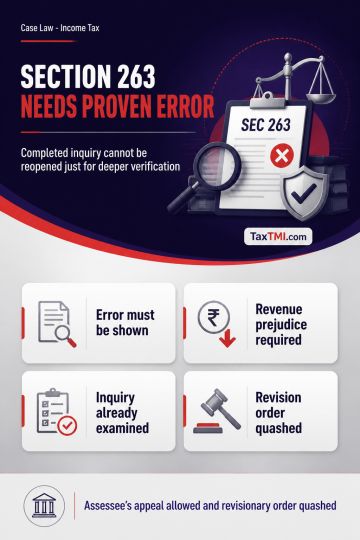
Revision under section 263 requires the assessment order to be both erroneous and prejudicial to the interests of the Revenue. The distinction between lack of inquiry and inadequate inquiry is material: where the Assessing Officer has examined relevant expenses, related-party payments, GST-exempt services, financial records, returns, GST details, TDS particulars and supplier-level material, revision cannot be based merely on a view that further verification was desirable. The revisional authority must identify an actual error from the assessment record and demonstrate resulting prejudice; it cannot order a fresh investigation without establishing both statutory conditions. The stated result was quashing of the revisionary order and allowance of the assessee's appeal.
Revision under section 263 requires the assessment order to be both erroneous and prejudicial to the interests of the Revenue. The distinction between lack of inquiry and inadequate inquiry is material: where the Assessing Officer has examined relevant expenses, related-party payments, GST-exempt services, financial records, returns, GST details, TDS particulars and supplier-level material, revision cannot be based merely on a view that further verification was desirable. The revisional authority must identify an actual error from the assessment record and demonstrate resulting prejudice; it cannot order a fresh investigation without establishing both statutory conditions. The stated result was quashing of the revisionary order and allowance of the assessee's appeal.
Note: It is a system-generated summary and is for quick reference only.
 TaxTMI
 of 4782























 Join Channel


 TaxTMI
