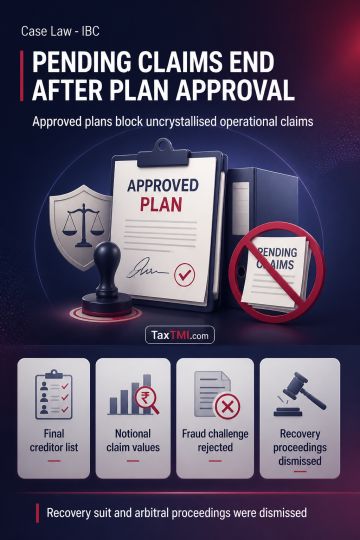
Clean slate principle extinguishes uncrystallised operational claims and bars continuation of pending recovery and arbitral proceedings after plan app...
Works contract classification governs composite layout-development contracts where VAT-paid goods are transferred alongside construction and infrastru...
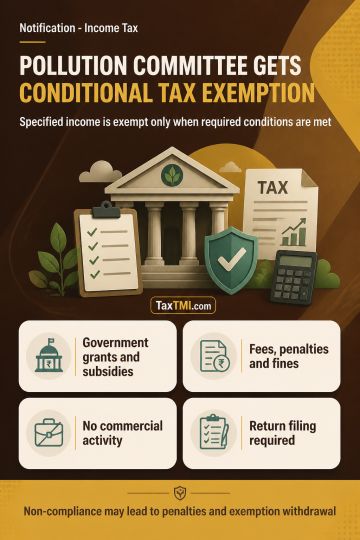
Specified income tax exemption for pollution control body remains conditional on non-commercial activity, unchanged income character, and return filin...
Jurisdictional facts in certificate-of-origin discrepancies can support customs show-cause proceedings, leaving factual explanations for departmental ...
Revision under section 263 requires the assessment order to be both erroneous and prejudicial to the interests of the Revenue. The distinction between lack of inquiry and inadequate inquiry is material: where the Assessing Officer has examined relevant expenses, related-party payments, GST-exempt services, financial records, returns, GST details, TDS particulars and supplier-level material, revision cannot be based merely on a view that further verification was desirable. The revisional authority must identify an actual error from the assessment record and demonstrate resulting prejudice; it cannot order a fresh investigation without establishing both statutory conditions. The stated result was quashing of the revisionary order and allowance of the assessee's appeal.
Revision under section 263 requires the assessment order to be both erroneous and prejudicial to the interests of the Revenue. The distinction between lack of inquiry and inadequate inquiry is material: where the Assessing Officer has examined relevant expenses, related-party payments, GST-exempt services, financial records, returns, GST details, TDS particulars and supplier-level material, revision cannot be based merely on a view that further verification was desirable. The revisional authority must identify an actual error from the assessment record and demonstrate resulting prejudice; it cannot order a fresh investigation without establishing both statutory conditions. The stated result was quashing of the revisionary order and allowance of the assessee's appeal.
Note: It is a system-generated summary and is for quick reference only.
 TaxTMI
 of 4782











 Join Channel



 TaxTMI