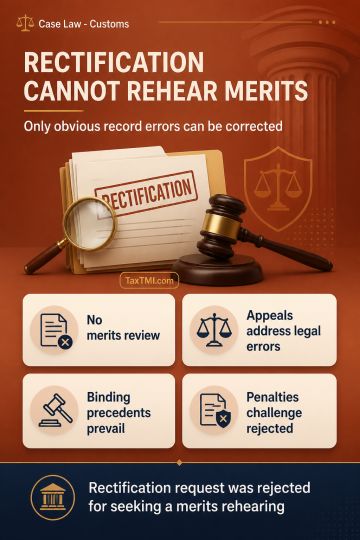
Rectification of mistake remains limited to self-evident record errors, preventing merits review through miscellaneous applications and preserving fin...
Tender creditworthiness conditions may extend to de facto Promoter Directors, with post-participation challenges generally barred absent arbitrariness...
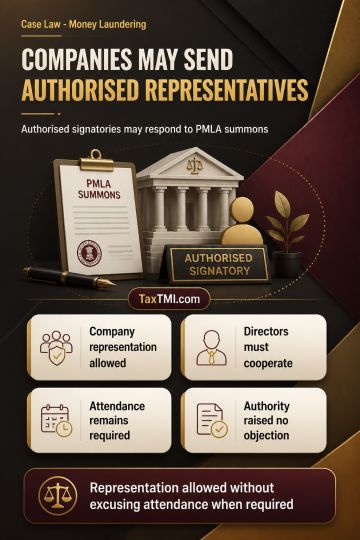
Corporate representation in PMLA summons proceedings permitted through an authorised signatory, subject to directors' continuing cooperation and atten...
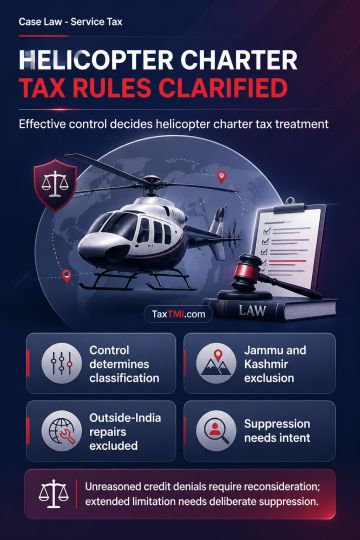
Helicopter charter classification requires effective control analysis, while territorial performance, reasoned credit orders and wilful suppression de...
Specified fund definition expands PAN exemption eligibility for registered alternative investment funds and qualifying International Financial Service...
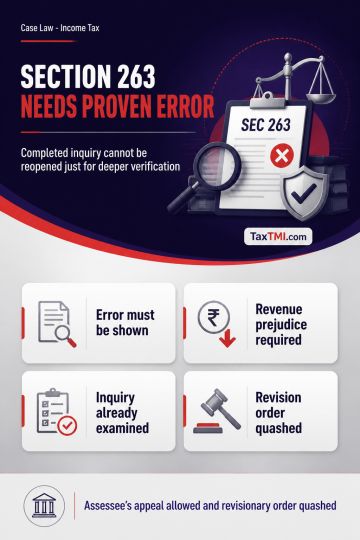
Revision under section 263 requires the assessment order to be both erroneous and prejudicial to the interests of the Revenue. The distinction between lack of inquiry and inadequate inquiry is material: where the Assessing Officer has examined relevant expenses, related-party payments, GST-exempt services, financial records, returns, GST details, TDS particulars and supplier-level material, revision cannot be based merely on a view that further verification was desirable. The revisional authority must identify an actual error from the assessment record and demonstrate resulting prejudice; it cannot order a fresh investigation without establishing both statutory conditions. The stated result was quashing of the revisionary order and allowance of the assessee's appeal.
Revision under section 263 requires the assessment order to be both erroneous and prejudicial to the interests of the Revenue. The distinction between lack of inquiry and inadequate inquiry is material: where the Assessing Officer has examined relevant expenses, related-party payments, GST-exempt services, financial records, returns, GST details, TDS particulars and supplier-level material, revision cannot be based merely on a view that further verification was desirable. The revisional authority must identify an actual error from the assessment record and demonstrate resulting prejudice; it cannot order a fresh investigation without establishing both statutory conditions. The stated result was quashing of the revisionary order and allowance of the assessee's appeal.
Note: It is a system-generated summary and is for quick reference only.
 TaxTMI
 of 4786













 Join Channel


 TaxTMI
