Transaction value rejection requires reliable corroboration; refundable VAT is excluded and temporary registration does not defeat new-vehicle exempti...
Appellate jurisdiction remains available where a wrist-worn gold ornament cannot conclusively be characterised as imported baggage at the preliminary ...
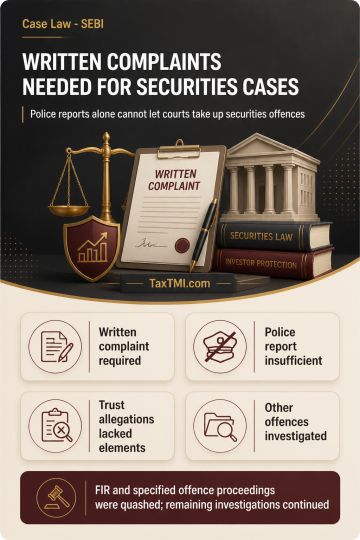
Written complaint requirement bars cognizance on police reports for securities offences, while unsupported breach of trust and cheating allegations fa...
Risk-based postal import clearance standardises electronic assessment, document requests, duty realisation and delivery controls at Foreign Post Offic...
Customs Cargo Service Provider appointment extends custodianship to additional terminal land, subject to cargo-control, security and licence condition...
Section 2(c)(viii) read with Section 2(b) of the Prevention of...
Public servant status under anti-corruption law extends to recognised stock exchange leadership; constitutional and sanction challenges do not succeed preliminarily
Contents
Summary
Note
Bookmark
Share
✓ Copied successfully !
Print
Print Options
For full text, please login
Login to TaxTMI
Verification Pending
The Email Id has not been verified. Click on the link we have sent on
Section 2(c)(viii) read with Section 2(b) of the Prevention of Corruption Act, 1988 is described as constitutionally valid because it contains ascertainable requirements: a person must hold an office and, by virtue of it, be authorised or required to perform a public duty. The statutory concept of public servant is to be construed purposively and broadly to address corruption beyond government departments. A recognised stock exchange operates within a statutory framework serving investor protection and public interest, and its Managing Director and CEO may therefore fall within the definition. Whether the individual performed relevant public functions remains a mixed question of fact and law. A sanction caveat leaving the legal issue open did not invalidate the sanction, and quashing was considered inappropriate before trial.
Section 2(c)(viii) read with Section 2(b) of the Prevention of Corruption Act, 1988 is described as constitutionally valid because it contains ascertainable requirements: a person must hold an office and, by virtue of it, be authorised or required to perform a public duty. The statutory concept of public servant is to be construed purposively and broadly to address corruption beyond government departments. A recognised stock exchange operates within a statutory framework serving investor protection and public interest, and its Managing Director and CEO may therefore fall within the definition. Whether the individual performed relevant public functions remains a mixed question of fact and law. A sanction caveat leaving the legal issue open did not invalidate the sanction, and quashing was considered inappropriate before trial.
Note: It is a system-generated summary and is for quick reference only.
 TaxTMI
 of 4792









 Join Channel



 TaxTMI