Digital accessibility audit and remediation deadlines extended, while all other disability-compliance obligations for regulated entities remain unchan...
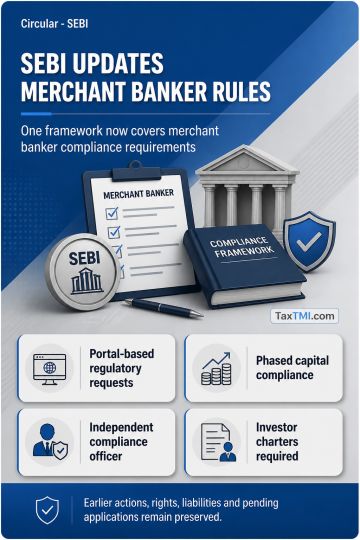
Merchant banker regulation consolidates registration, governance, capital, reporting, outsourcing and investor-protection requirements under an update...
Specialized Investment Fund distribution now requires dedicated certification, while transitional recognition preserves existing qualified distributor...
Public servant status under anti-corruption law extends to recognised stock exchange leadership; constitutional and sanction challenges do not succeed...
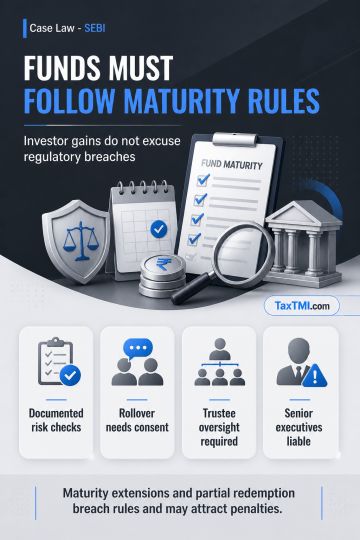
Mutual fund maturity rules require proper rollover, redemption, disclosure, and due diligence; investor gains cannot excuse regulatory breaches or pen...
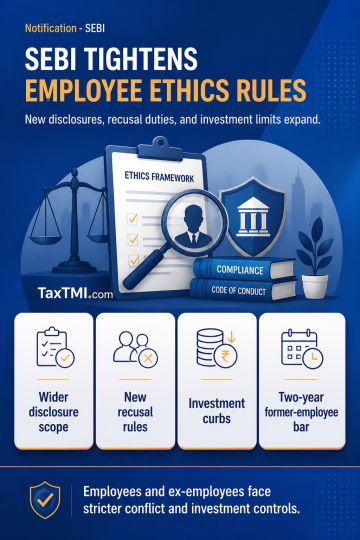
Employee conflict disclosures and investment restrictions expand with new recusal duties, post-employment limits, and compliance reporting requirement...
Section 2(c)(viii) read with Section 2(b) of the Prevention of...
Public servant status under anti-corruption law extends to recognised stock exchange leadership; constitutional and sanction challenges do not succeed preliminarily
Contents
Summary
Note
Bookmark
Share
✓ Copied successfully !
Print
Print Options
For full text, please login
Login to TaxTMI
Verification Pending
The Email Id has not been verified. Click on the link we have sent on
Section 2(c)(viii) read with Section 2(b) of the Prevention of Corruption Act, 1988 is described as constitutionally valid because it contains ascertainable requirements: a person must hold an office and, by virtue of it, be authorised or required to perform a public duty. The statutory concept of public servant is to be construed purposively and broadly to address corruption beyond government departments. A recognised stock exchange operates within a statutory framework serving investor protection and public interest, and its Managing Director and CEO may therefore fall within the definition. Whether the individual performed relevant public functions remains a mixed question of fact and law. A sanction caveat leaving the legal issue open did not invalidate the sanction, and quashing was considered inappropriate before trial.
Section 2(c)(viii) read with Section 2(b) of the Prevention of Corruption Act, 1988 is described as constitutionally valid because it contains ascertainable requirements: a person must hold an office and, by virtue of it, be authorised or required to perform a public duty. The statutory concept of public servant is to be construed purposively and broadly to address corruption beyond government departments. A recognised stock exchange operates within a statutory framework serving investor protection and public interest, and its Managing Director and CEO may therefore fall within the definition. Whether the individual performed relevant public functions remains a mixed question of fact and law. A sanction caveat leaving the legal issue open did not invalidate the sanction, and quashing was considered inappropriate before trial.
Note: It is a system-generated summary and is for quick reference only.
 TaxTMI
















 Join Channel


 TaxTMI

