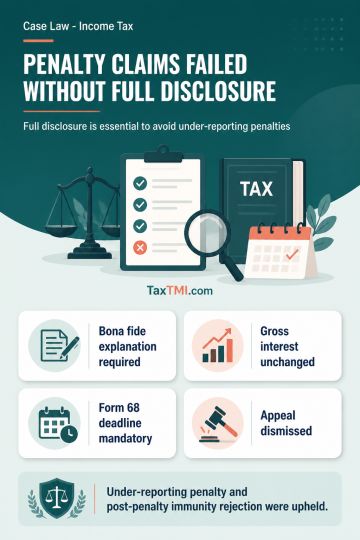
Bona fide disclosure requirements govern under-reporting penalties, and post-penalty immunity applications cannot secure available statutory protectio...
Certificate-of-origin verification procedure governs preferential customs benefits; denial without retroactive verification was set aside with consequ...
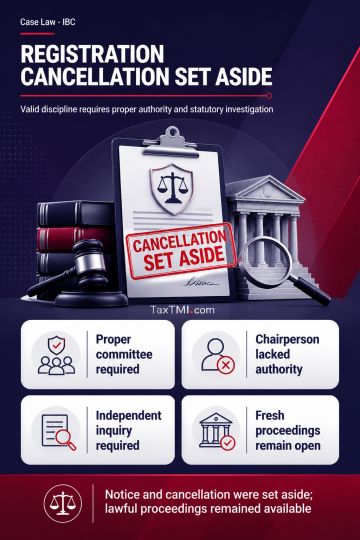
Disciplinary Committee jurisdiction and mandatory investigation requirements invalidated cancellation of an insolvency professional's registration and...
Retention of seized property survives where recorded reasons support proceeds of crime, while stayed investigation periods are excluded from limitatio...
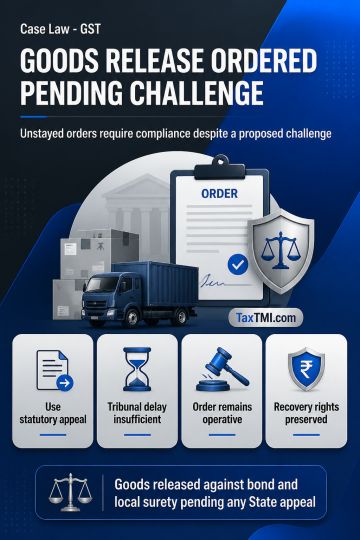
A challenge by the State to a first appellate order under the GST enactment should ordinarily be pursued before the statutory appellate forum, which can examine questions of fact and law; writ jurisdiction should not be exercised at first instance merely because the Tribunal was not fully functional. The appellate order remained operative because it had neither been stayed nor set aside, so compliance could not be withheld on the basis of a proposed challenge. Release of the goods was therefore directed subject to the petitioner furnishing a bond and local surety, preserving consequential recovery if the State ultimately succeeded in appeal.
A challenge by the State to a first appellate order under the GST enactment should ordinarily be pursued before the statutory appellate forum, which can examine questions of fact and law; writ jurisdiction should not be exercised at first instance merely because the Tribunal was not fully functional. The appellate order remained operative because it had neither been stayed nor set aside, so compliance could not be withheld on the basis of a proposed challenge. Release of the goods was therefore directed subject to the petitioner furnishing a bond and local surety, preserving consequential recovery if the State ultimately succeeded in appeal.
Note: It is a system-generated summary and is for quick reference only.
 TaxTMI
 of 4782









 Join Channel


 TaxTMI