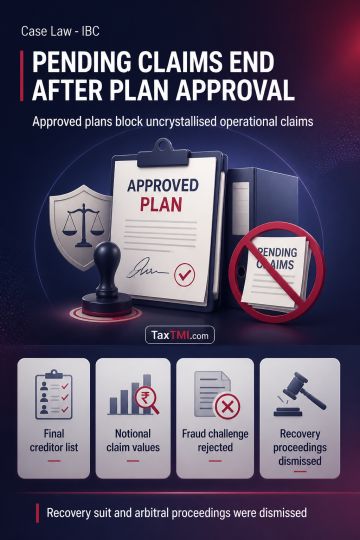
Clean slate principle extinguishes uncrystallised operational claims and bars continuation of pending recovery and arbitral proceedings after plan app...
Works contract classification governs composite layout-development contracts where VAT-paid goods are transferred alongside construction and infrastru...
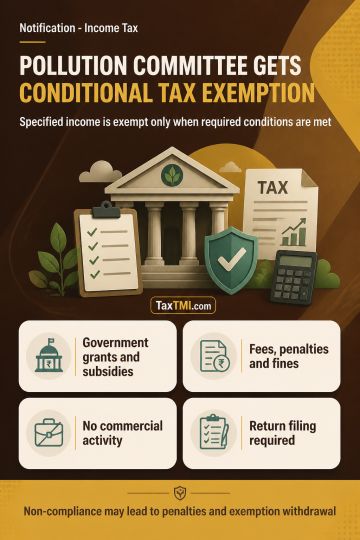
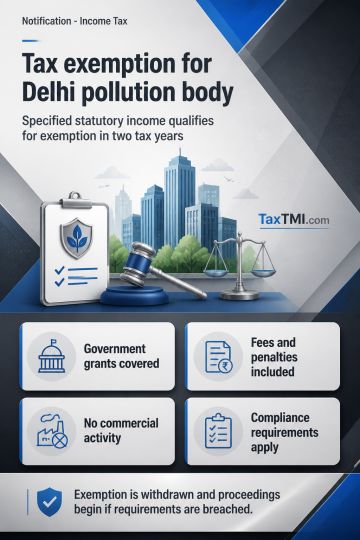
Specified income tax exemption for pollution control body remains conditional on non-commercial activity, unchanged income character, and return filin...
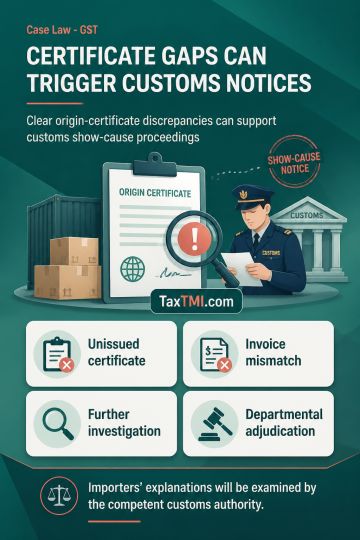
Jurisdictional facts in certificate-of-origin discrepancies can support customs show-cause proceedings, leaving factual explanations for departmental ...
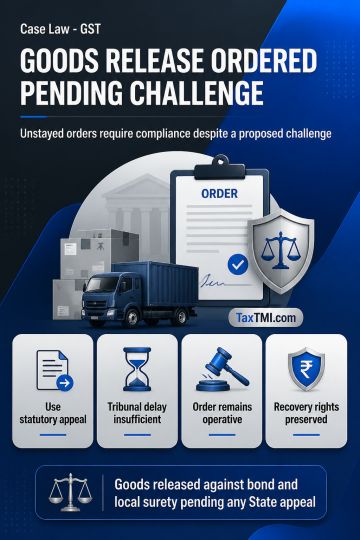
A challenge by the State to a first appellate order under the GST enactment should ordinarily be pursued before the statutory appellate forum, which can examine questions of fact and law; writ jurisdiction should not be exercised at first instance merely because the Tribunal was not fully functional. The appellate order remained operative because it had neither been stayed nor set aside, so compliance could not be withheld on the basis of a proposed challenge. Release of the goods was therefore directed subject to the petitioner furnishing a bond and local surety, preserving consequential recovery if the State ultimately succeeded in appeal.
A challenge by the State to a first appellate order under the GST enactment should ordinarily be pursued before the statutory appellate forum, which can examine questions of fact and law; writ jurisdiction should not be exercised at first instance merely because the Tribunal was not fully functional. The appellate order remained operative because it had neither been stayed nor set aside, so compliance could not be withheld on the basis of a proposed challenge. Release of the goods was therefore directed subject to the petitioner furnishing a bond and local surety, preserving consequential recovery if the State ultimately succeeded in appeal.
Note: It is a system-generated summary and is for quick reference only.
 TaxTMI
 of 4784






 Join Channel


 TaxTMI