Admissibility of electronic evidence bars undervaluation demands where printouts, retracted statements and no cross-examination leave the case unprove...
Limitation in oppression and mismanagement proceedings: prior knowledge of removal and dilution barred the challenge, with valuation directions upheld...
Insolvency professional agency governance rules amended to add nominee directors, tighten independent director eligibility, and regulate managing dire...
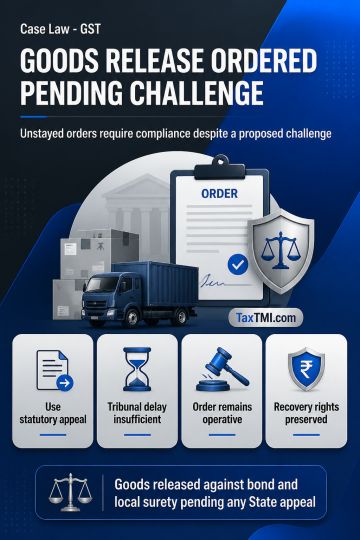
A challenge by the State to a first appellate order under the GST enactment should ordinarily be pursued before the statutory appellate forum, which can examine questions of fact and law; writ jurisdiction should not be exercised at first instance merely because the Tribunal was not fully functional. The appellate order remained operative because it had neither been stayed nor set aside, so compliance could not be withheld on the basis of a proposed challenge. Release of the goods was therefore directed subject to the petitioner furnishing a bond and local surety, preserving consequential recovery if the State ultimately succeeded in appeal.
A challenge by the State to a first appellate order under the GST enactment should ordinarily be pursued before the statutory appellate forum, which can examine questions of fact and law; writ jurisdiction should not be exercised at first instance merely because the Tribunal was not fully functional. The appellate order remained operative because it had neither been stayed nor set aside, so compliance could not be withheld on the basis of a proposed challenge. Release of the goods was therefore directed subject to the petitioner furnishing a bond and local surety, preserving consequential recovery if the State ultimately succeeded in appeal.
Note: It is a system-generated summary and is for quick reference only.
 TaxTMI
  TaxTMI
 of 4819


 Join Channel