Retrospective cancellation of charitable registration under section 12AB(4) was unsustainable; related-party benefit allegations did not prove nongenu...
Merger control notice and disclosure rules: Supreme Court limits penalties, rejects reopening of approved combination, and sets aside adverse findings...
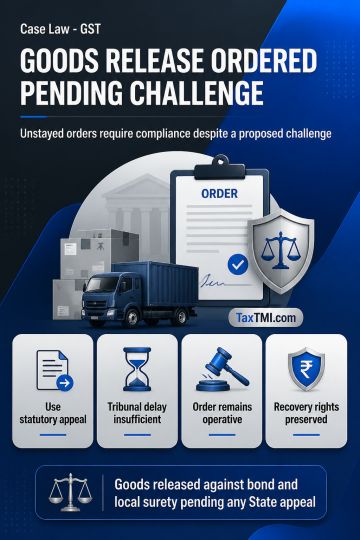
A challenge by the State to a first appellate order under the GST enactment should ordinarily be pursued before the statutory appellate forum, which can examine questions of fact and law; writ jurisdiction should not be exercised at first instance merely because the Tribunal was not fully functional. The appellate order remained operative because it had neither been stayed nor set aside, so compliance could not be withheld on the basis of a proposed challenge. Release of the goods was therefore directed subject to the petitioner furnishing a bond and local surety, preserving consequential recovery if the State ultimately succeeded in appeal.
A challenge by the State to a first appellate order under the GST enactment should ordinarily be pursued before the statutory appellate forum, which can examine questions of fact and law; writ jurisdiction should not be exercised at first instance merely because the Tribunal was not fully functional. The appellate order remained operative because it had neither been stayed nor set aside, so compliance could not be withheld on the basis of a proposed challenge. Release of the goods was therefore directed subject to the petitioner furnishing a bond and local surety, preserving consequential recovery if the State ultimately succeeded in appeal.
Note: It is a system-generated summary and is for quick reference only.
 TaxTMI
  TaxTMI
 of 4817


 Join Channel