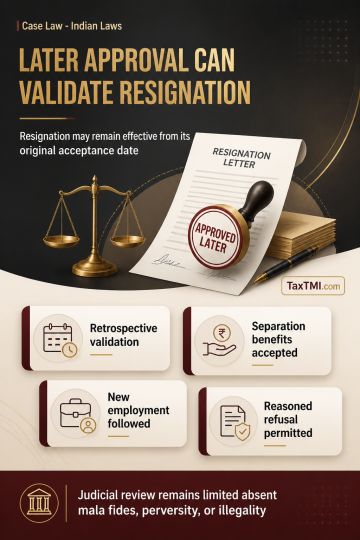
Ratification of resignation acceptance validates separation retrospectively, while withdrawal may be refused through reasoned administrative discretio...
Nature-dependent electricity contracts receive new Ind AS accounting, hedge designation, transition and financial-statement disclosure requirements fr...
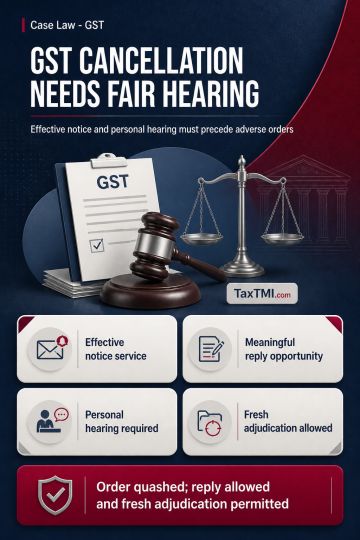
Alternative GST remedy permitted protective writ intervention for ex parte adjudication, preserving independent appellate review of input tax credit d...
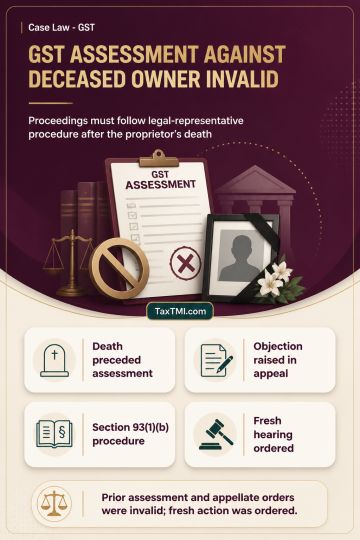
Assessment against deceased sole proprietor requires proceedings against the legal representative, rendering prior assessment and appellate orders inv...
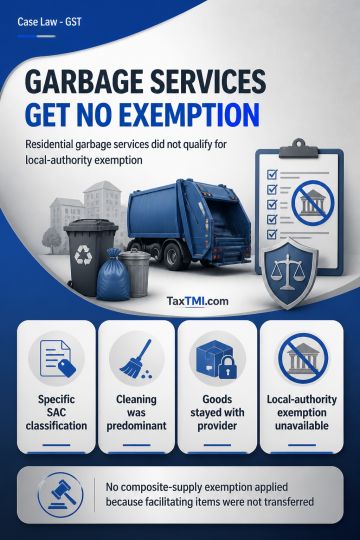
Residential waste collection classification under SAC 999423 defeats composite-supply exemption where facilitating goods are not transferred to the lo...
Surplus arising after termination of a development arrangement...
Prolonged sterilisation of development rights supports capital-gains treatment, while business-income disallowances cannot govern capital-gains computation
Contents
Summary
Note
Bookmark
Share
✓ Copied successfully !
Print
Print Options
For full text, please login
Login to TaxTMI
Verification Pending
The Email Id has not been verified. Click on the link we have sent on
Surplus arising after termination of a development arrangement and transfer of consolidated property rights is distinguished from compensation for destruction of a profit-making apparatus. Where contractual restraints prolonged the commercial sterilisation of rights, termination restored pre-existing rights and acquisition of reversionary rights completed a transferable bundle; on these facts, the surplus was treated as taxable capital gains rather than a non-taxable capital receipt or business income. A business-income disallowance under section 40(a)(ia) was considered inapplicable to capital-gains computation. Expenditure or liability directly connected with removing encroachments and resolving boundary disputes may be allowable when genuinely incurred and sufficiently crystallised, subject to verification of documents, quantum, and nexus with the transfer.
Surplus arising after termination of a development arrangement and transfer of consolidated property rights is distinguished from compensation for destruction of a profit-making apparatus. Where contractual restraints prolonged the commercial sterilisation of rights, termination restored pre-existing rights and acquisition of reversionary rights completed a transferable bundle; on these facts, the surplus was treated as taxable capital gains rather than a non-taxable capital receipt or business income. A business-income disallowance under section 40(a)(ia) was considered inapplicable to capital-gains computation. Expenditure or liability directly connected with removing encroachments and resolving boundary disputes may be allowable when genuinely incurred and sufficiently crystallised, subject to verification of documents, quantum, and nexus with the transfer.
Note: It is a system-generated summary and is for quick reference only.
 TaxTMI
 of 4796

















 Join Channel



 TaxTMI
