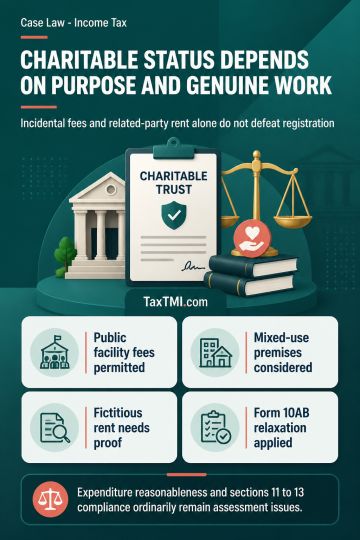
Charitable registration turns on predominant purpose and genuine activities, while incidental fees and related-party rent require supporting adverse m...
MAT book-profit adjustments exclude disallowances for exempt-income expenditure and demerger expenditure unless expressly listed under the statutory c...
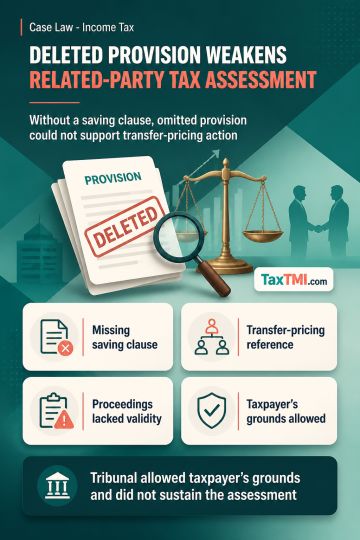
Omitted specified domestic transaction provision invalidates related-party expenditure transfer-pricing references and assessments based on consequent...
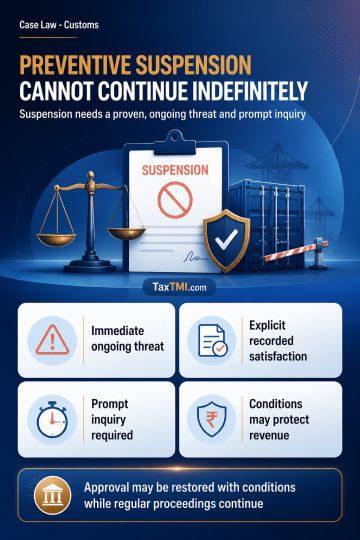
Preventive suspension requires an immediate continuing threat and cannot become indefinite without inquiry, fresh evidence, or proportionate safeguard...
Surplus arising after termination of a development arrangement...
Prolonged sterilisation of development rights supports capital-gains treatment, while business-income disallowances cannot govern capital-gains computation
Contents
Summary
Note
Bookmark
Share
✓ Copied successfully !
Print
Print Options
For full text, please login
Login to TaxTMI
Verification Pending
The Email Id has not been verified. Click on the link we have sent on
Surplus arising after termination of a development arrangement and transfer of consolidated property rights is distinguished from compensation for destruction of a profit-making apparatus. Where contractual restraints prolonged the commercial sterilisation of rights, termination restored pre-existing rights and acquisition of reversionary rights completed a transferable bundle; on these facts, the surplus was treated as taxable capital gains rather than a non-taxable capital receipt or business income. A business-income disallowance under section 40(a)(ia) was considered inapplicable to capital-gains computation. Expenditure or liability directly connected with removing encroachments and resolving boundary disputes may be allowable when genuinely incurred and sufficiently crystallised, subject to verification of documents, quantum, and nexus with the transfer.
Surplus arising after termination of a development arrangement and transfer of consolidated property rights is distinguished from compensation for destruction of a profit-making apparatus. Where contractual restraints prolonged the commercial sterilisation of rights, termination restored pre-existing rights and acquisition of reversionary rights completed a transferable bundle; on these facts, the surplus was treated as taxable capital gains rather than a non-taxable capital receipt or business income. A business-income disallowance under section 40(a)(ia) was considered inapplicable to capital-gains computation. Expenditure or liability directly connected with removing encroachments and resolving boundary disputes may be allowable when genuinely incurred and sufficiently crystallised, subject to verification of documents, quantum, and nexus with the transfer.
Note: It is a system-generated summary and is for quick reference only.
 TaxTMI
 of 4796
















 Join Channel



 TaxTMI
