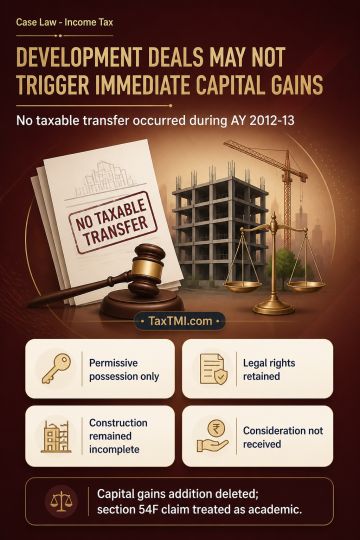
Development agreements require legal possession or effective enjoyment for capital gains transfer; permissive possession and deferred consideration de...
Prolonged sterilisation of development rights supports capital-gains treatment, while business-income disallowances cannot govern capital-gains comput...
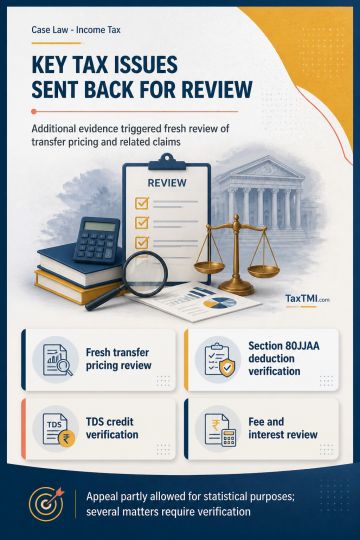
Additional evidence in transfer pricing dispute leads to fresh examination, while tax deductions, TDS credit, fee and refund interest require verifica...
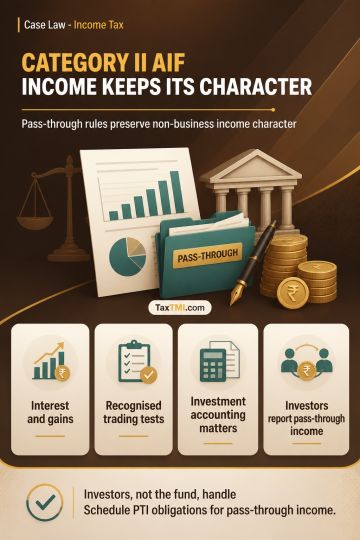
Category II AIF pass-through taxation preserves non-business income character; investment receipts cannot be reclassified without applying recognised ...
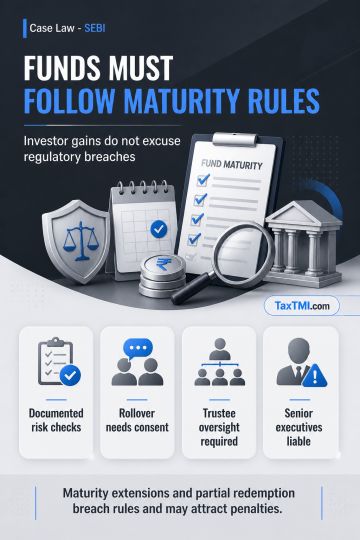
Mutual fund maturity rules require proper rollover, redemption, disclosure, and due diligence; investor gains cannot excuse regulatory breaches or pen...
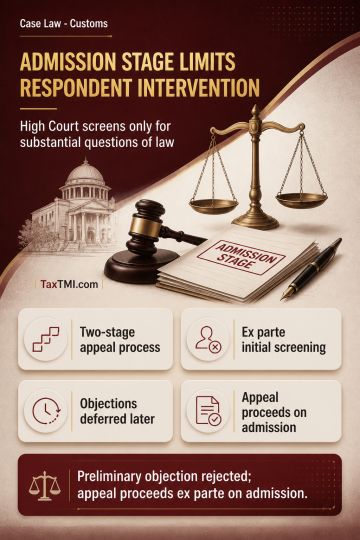
Section 130 of the Customs Act is described as establishing a self-contained, two-stage appellate process. At the pre-admission stage, the High Court conducts an ex parte screening limited to whether the memorandum discloses a substantial question of law; respondents cannot intervene then to contest maintainability, jurisdiction, or the applicable rate-of-duty notification. Those objections are deferred to the post-admission hearing under Section 130(5), where respondents may argue that the framed questions do not arise or are legally barred. High Court Rules cannot override the statutory sequence, and provisions concerning procedural defects do not permit a merits-based threshold challenge. The preliminary objection was rejected and the appeal was directed to proceed ex parte on admission.
Section 130 of the Customs Act is described as establishing a self-contained, two-stage appellate process. At the pre-admission stage, the High Court conducts an ex parte screening limited to whether the memorandum discloses a substantial question of law; respondents cannot intervene then to contest maintainability, jurisdiction, or the applicable rate-of-duty notification. Those objections are deferred to the post-admission hearing under Section 130(5), where respondents may argue that the framed questions do not arise or are legally barred. High Court Rules cannot override the statutory sequence, and provisions concerning procedural defects do not permit a merits-based threshold challenge. The preliminary objection was rejected and the appeal was directed to proceed ex parte on admission.
Note: It is a system-generated summary and is for quick reference only.
 TaxTMI
 of 4782










 Join Channel


 TaxTMI