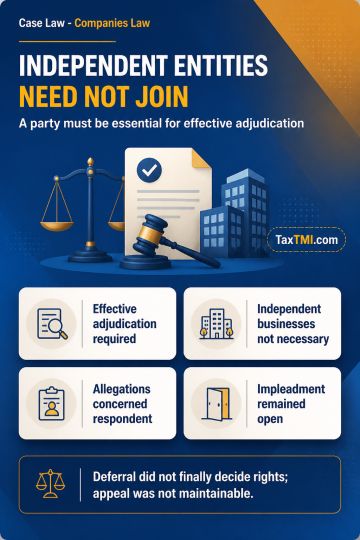
Necessary-party requirements limit impleadment of independent entities, while deferred consideration does not create an appealable adverse determinati...
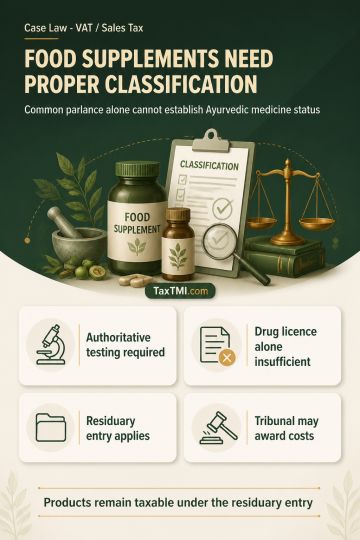
Food supplement classification requires common parlance and authoritative tests, preventing treatment as proprietary Ayurvedic medicines without suppo...
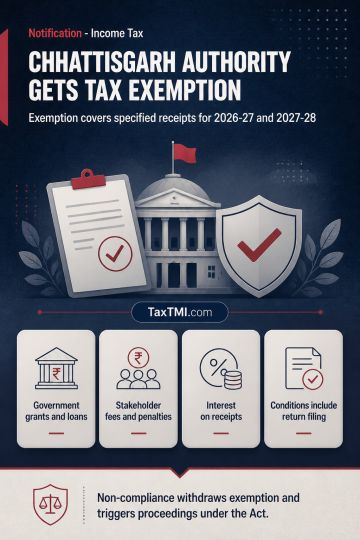
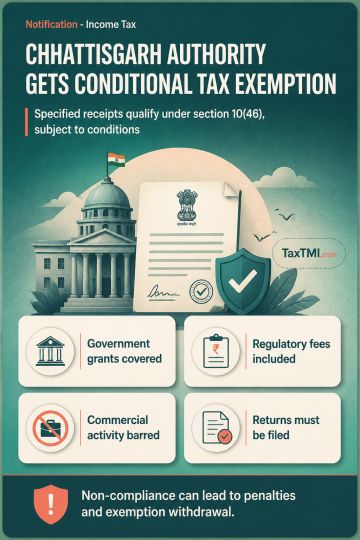
Specified regulatory authority income receives conditional tax exemption, subject to non-commercial activity, unchanged income character, and return f...
Tax exemption for regulatory authority income applies retrospectively, subject to non-commercial activity, unchanged income sources, and return-filing...
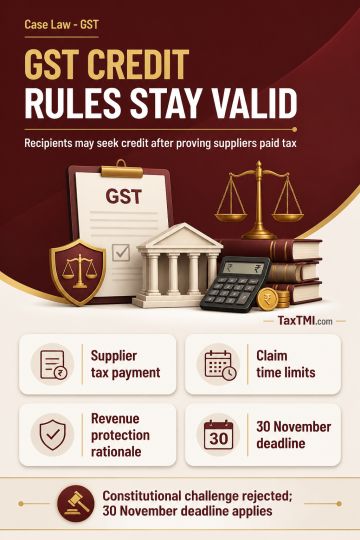
Input tax credit conditions remain constitutionally valid, with eligible recipient claims considered under GST circulars and retrospective filing dead...
Section 130 of the Customs Act is described as establishing a self-contained, two-stage appellate process. At the pre-admission stage, the High Court conducts an ex parte screening limited to whether the memorandum discloses a substantial question of law; respondents cannot intervene then to contest maintainability, jurisdiction, or the applicable rate-of-duty notification. Those objections are deferred to the post-admission hearing under Section 130(5), where respondents may argue that the framed questions do not arise or are legally barred. High Court Rules cannot override the statutory sequence, and provisions concerning procedural defects do not permit a merits-based threshold challenge. The preliminary objection was rejected and the appeal was directed to proceed ex parte on admission.
Section 130 of the Customs Act is described as establishing a self-contained, two-stage appellate process. At the pre-admission stage, the High Court conducts an ex parte screening limited to whether the memorandum discloses a substantial question of law; respondents cannot intervene then to contest maintainability, jurisdiction, or the applicable rate-of-duty notification. Those objections are deferred to the post-admission hearing under Section 130(5), where respondents may argue that the framed questions do not arise or are legally barred. High Court Rules cannot override the statutory sequence, and provisions concerning procedural defects do not permit a merits-based threshold challenge. The preliminary objection was rejected and the appeal was directed to proceed ex parte on admission.
Note: It is a system-generated summary and is for quick reference only.
 TaxTMI
 of 4792






 Join Channel



 TaxTMI