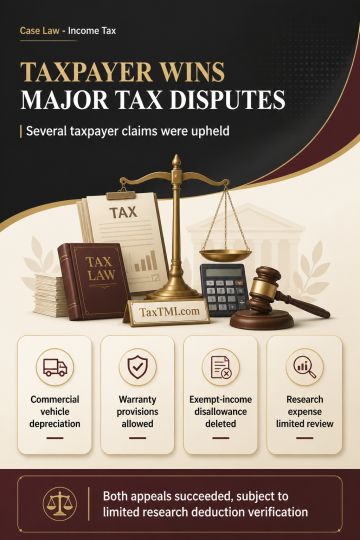
Commercial vehicle depreciation, scientifically determined warranty provisions and exempt-income disallowances were resolved in favour of the taxpayer...
Inherited property sale proceeds require capital-gains treatment where ownership is supported by evidence, not suspicion or unverified signature doubt...
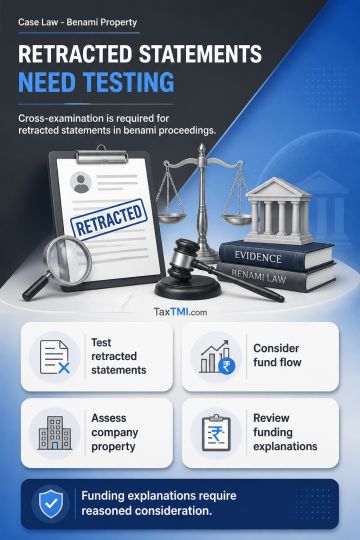
Cross-examination of retracted statements is essential where foundational evidence supports a benami allegation and documented funding explanations re...
Capital-goods exemption covers plant-modernisation accessories, while the import restriction applies only to earlier capital-goods components and spar...
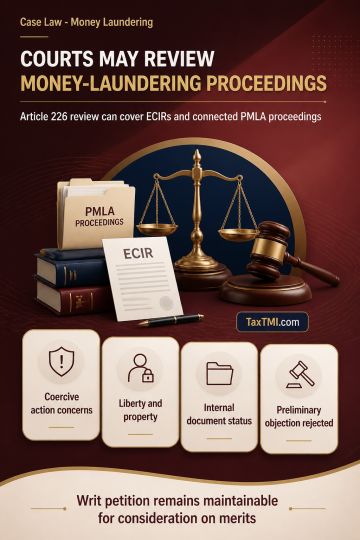
Constitutional judicial review permits challenges to ECIRs and connected money-laundering proceedings where coercive action affects fundamental intere...
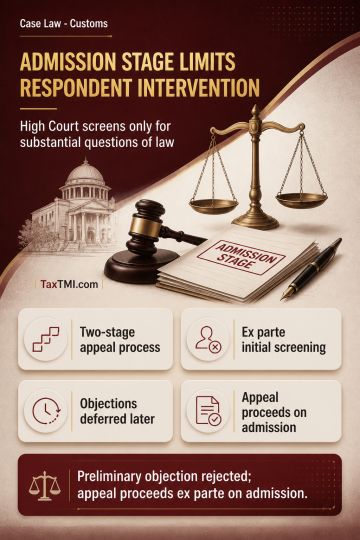
Section 130 of the Customs Act is described as establishing a self-contained, two-stage appellate process. At the pre-admission stage, the High Court conducts an ex parte screening limited to whether the memorandum discloses a substantial question of law; respondents cannot intervene then to contest maintainability, jurisdiction, or the applicable rate-of-duty notification. Those objections are deferred to the post-admission hearing under Section 130(5), where respondents may argue that the framed questions do not arise or are legally barred. High Court Rules cannot override the statutory sequence, and provisions concerning procedural defects do not permit a merits-based threshold challenge. The preliminary objection was rejected and the appeal was directed to proceed ex parte on admission.
Section 130 of the Customs Act is described as establishing a self-contained, two-stage appellate process. At the pre-admission stage, the High Court conducts an ex parte screening limited to whether the memorandum discloses a substantial question of law; respondents cannot intervene then to contest maintainability, jurisdiction, or the applicable rate-of-duty notification. Those objections are deferred to the post-admission hearing under Section 130(5), where respondents may argue that the framed questions do not arise or are legally barred. High Court Rules cannot override the statutory sequence, and provisions concerning procedural defects do not permit a merits-based threshold challenge. The preliminary objection was rejected and the appeal was directed to proceed ex parte on admission.
Note: It is a system-generated summary and is for quick reference only.
 TaxTMI
 of 4796









 Join Channel


 TaxTMI
