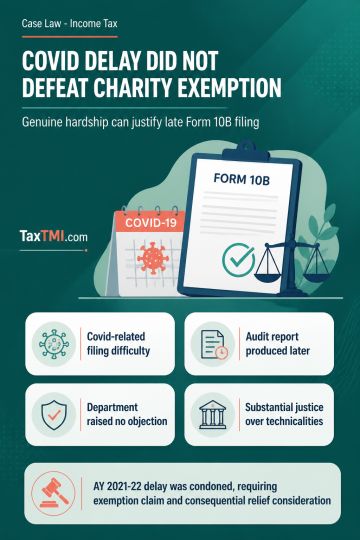
Belated Form 10B filing during Covid-19 cannot defeat charitable exemption where genuine hardship warrants condonation and substantial justice prevail...
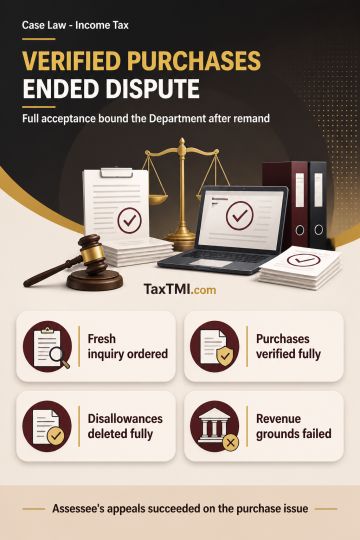
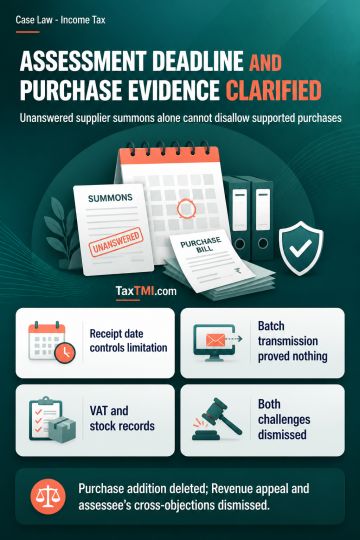
Limitation for consequential assessments runs from prescribed authority receipt, while verified purchases cannot be disallowed merely for unanswered s...
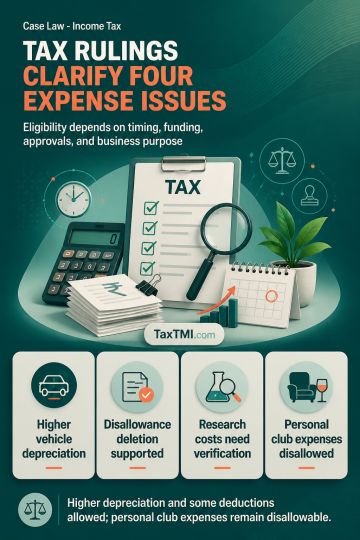
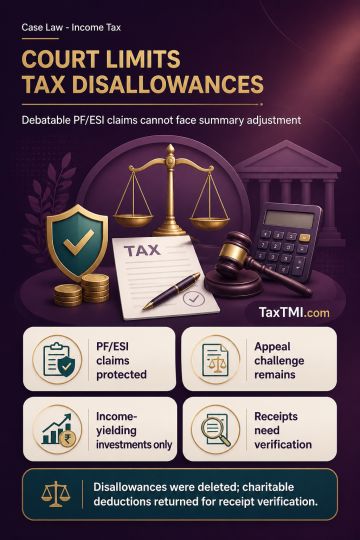
Higher depreciation for qualifying commercial vehicles, exempt-income disallowance, research deduction verification, and club-expense treatment clarif...
Page of 4803
Press 'Enter' after typing page number.
1 to 20 of 96046 Results
❮
❯
❯❯
0 / 200
Expand Note
Add to Folder
No Folders have been created
+
Are you sure you want to delete "My most important" ?
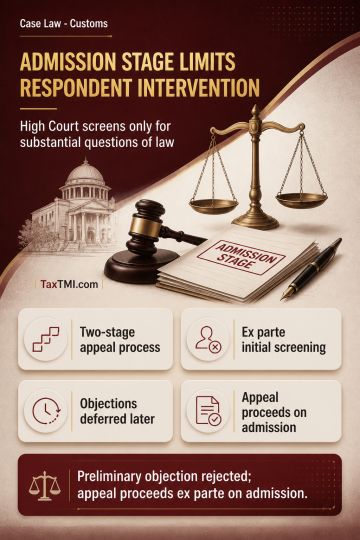
Section 130 of the Customs Act is described as establishing a self-contained, two-stage appellate process. At the pre-admission stage, the High Court conducts an ex parte screening limited to whether the memorandum discloses a substantial question of law; respondents cannot intervene then to contest maintainability, jurisdiction, or the applicable rate-of-duty notification. Those objections are deferred to the post-admission hearing under Section 130(5), where respondents may argue that the framed questions do not arise or are legally barred. High Court Rules cannot override the statutory sequence, and provisions concerning procedural defects do not permit a merits-based threshold challenge. The preliminary objection was rejected and the appeal was directed to proceed ex parte on admission.
Section 130 of the Customs Act is described as establishing a self-contained, two-stage appellate process. At the pre-admission stage, the High Court conducts an ex parte screening limited to whether the memorandum discloses a substantial question of law; respondents cannot intervene then to contest maintainability, jurisdiction, or the applicable rate-of-duty notification. Those objections are deferred to the post-admission hearing under Section 130(5), where respondents may argue that the framed questions do not arise or are legally barred. High Court Rules cannot override the statutory sequence, and provisions concerning procedural defects do not permit a merits-based threshold challenge. The preliminary objection was rejected and the appeal was directed to proceed ex parte on admission.
Note: It is a system-generated summary and is for quick reference only.
 TaxTMI







 Join Channel


 TaxTMI