Transfer pricing comparability requires functional alignment, reliable financial data, and careful review of working capital and receivables adjustmen...
Transfer pricing rules require benchmarking corporate guarantees and associated-enterprise advances, while invalid domestic-transaction adjustments ca...
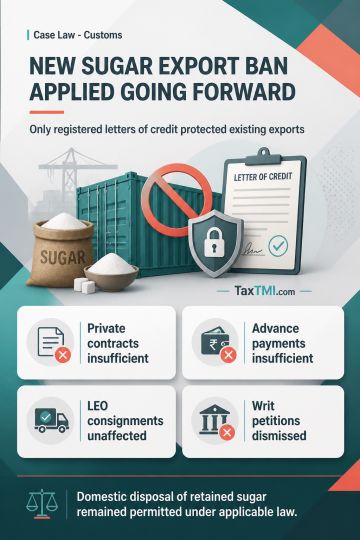
Prospective sugar export prohibition required registered letters of credit; private contracts and export quotas created no enforceable continuation ri...
Retroactive interim-moratorium exclusion permits protective asset disclosure and preservation measures against personal guarantors pending arbitration...
Mutual fund regulations require asset management companies to...
Mutual fund maturity rules require proper rollover, redemption, disclosure, and due diligence; investor gains cannot excuse regulatory breaches or penalties
Contents
Summary
Note
Bookmark
Share
✓ Copied successfully !
Print
Print Options
For full text, please login
Login to TaxTMI
Verification Pending
The Email Id has not been verified. Click on the link we have sent on
Mutual fund regulations require asset management companies to conduct documented due diligence addressing relevant credit, liquidity and interest-rate risks; eventual investor gains do not cure non-compliance. Close-ended schemes must be fully redeemed and wound up at maturity unless a prescribed rollover, including required disclosure and consent, is completed. Extending underlying debenture maturities and effecting only partial redemption therefore breaches the regulatory framework, and similar market conduct, absence of investor complaints, or investor benefit provides no defence. Trustees must independently oversee compliance and protect unitholder interests, while adequate disclosures to unitholders and the regulator are required. Securities-law penalties for established civil contraventions do not depend on mens rea, and senior executives may remain liable where their expertise and conduct contributed to the breach.
Mutual fund regulations require asset management companies to conduct documented due diligence addressing relevant credit, liquidity and interest-rate risks; eventual investor gains do not cure non-compliance. Close-ended schemes must be fully redeemed and wound up at maturity unless a prescribed rollover, including required disclosure and consent, is completed. Extending underlying debenture maturities and effecting only partial redemption therefore breaches the regulatory framework, and similar market conduct, absence of investor complaints, or investor benefit provides no defence. Trustees must independently oversee compliance and protect unitholder interests, while adequate disclosures to unitholders and the regulator are required. Securities-law penalties for established civil contraventions do not depend on mens rea, and senior executives may remain liable where their expertise and conduct contributed to the breach.
Note: It is a system-generated summary and is for quick reference only.
 TaxTMI
 of 4792















 Join Channel



 TaxTMI