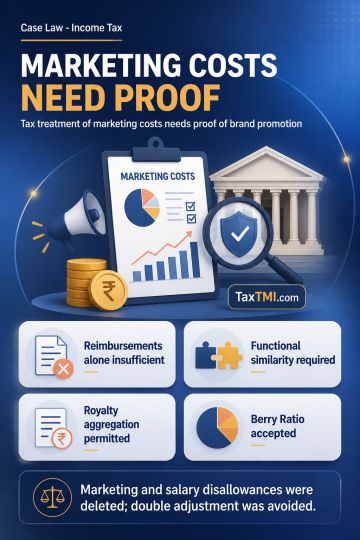
Transfer pricing requires evidence for AMP transactions, functionally reliable comparables, and appropriate aggregation or Berry Ratio benchmarking me...
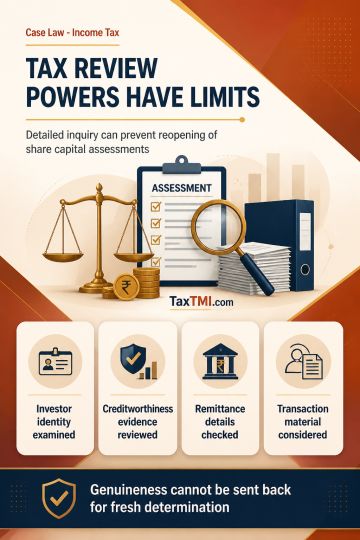
Revisionary jurisdiction cannot reopen share capital assessments where adequate inquiry supports a permissible view and no independent error is establ...
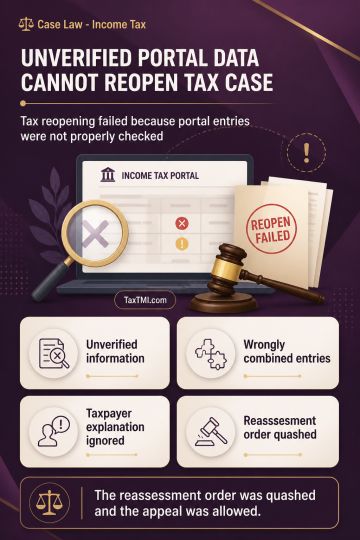
Reassessment jurisdiction fails where unverified portal information is aggregated without examining the taxpayer's explanation or relevance of entries...
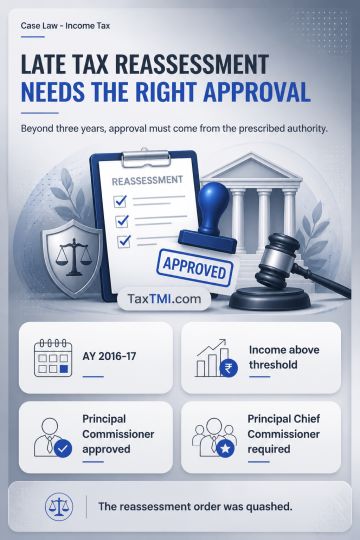
Statutory sanction for delayed reassessment requires approval from the prescribed authority; approval by an inferior authority invalidates jurisdictio...
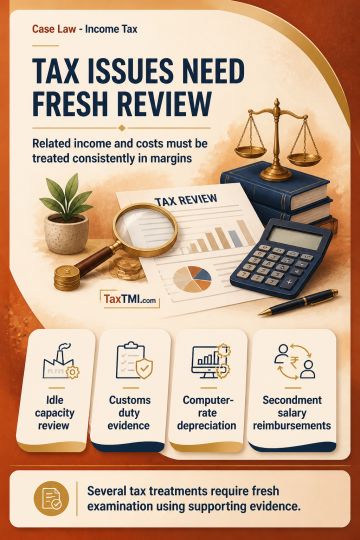
Transfer pricing margin adjustments require matching treatment of non-operating income and related costs, with comparability issues reconsidered on ev...
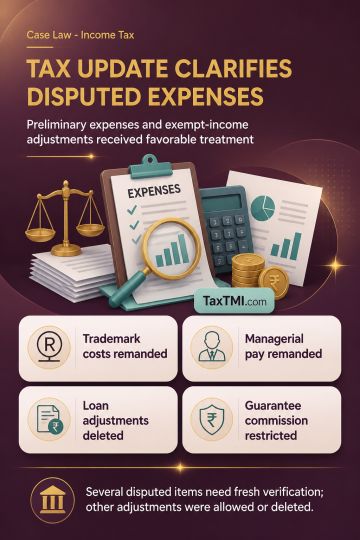
Preliminary-expense amortisation and MAT exempt-income adjustments prevailed, while trademark costs and managerial remuneration require fresh verifica...
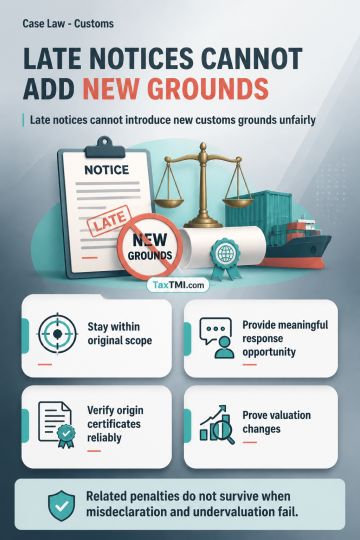
Export valuation requires contemporaneous evidence; unrelated invoices cannot prove overvaluation, and dual penalties on firm and partner are impermis...
Employee conflict disclosures and investment restrictions expand with new recusal duties, post-employment limits, and compliance reporting requirements.
Contents
Summary
Note
Bookmark
Share
✓ Copied successfully !
Print
Print Options
For full text, please login
Login to TaxTMI
Verification Pending
The Email Id has not been verified. Click on the link we have sent on
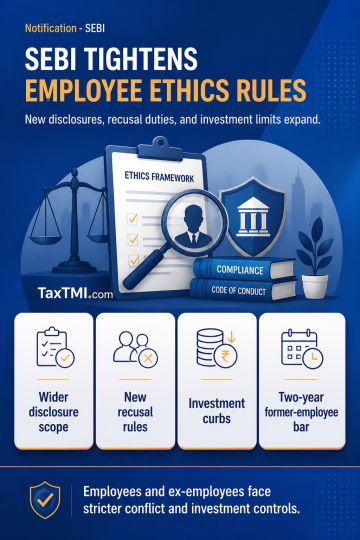
SEBI's 2026 amendments tighten employee ethics, conflict-management, and investment restrictions by redefining dependents, family members, financial investments, non-permitted investments, professional interest, relational interest, and related concepts, thereby widening the disclosure and compliance framework. Employees must disclose future employment negotiations, specified family, relative, property, liability, and investment details to the Office of Ethics and Compliance at joining, exit, and on prescribed changes and transactions. Fresh investment by employees and their family members in non-permitted investments is barred during service, subject to limited exceptions, transitional options for pre-existing holdings, and a concentration cap for certain pooled investment products. A new recusal framework requires withdrawal from matters involving conflicted relationships, material interests, or likely bias, and former employees face a two-year restriction on appearing before or against SEBI in covered matters.
SEBI's 2026 amendments tighten employee ethics, conflict-management, and investment restrictions by redefining dependents, family members, financial investments, non-permitted investments, professional interest, relational interest, and related concepts, thereby widening the disclosure and compliance framework. Employees must disclose future employment negotiations, specified family, relative, property, liability, and investment details to the Office of Ethics and Compliance at joining, exit, and on prescribed changes and transactions. Fresh investment by employees and their family members in non-permitted investments is barred during service, subject to limited exceptions, transitional options for pre-existing holdings, and a concentration cap for certain pooled investment products. A new recusal framework requires withdrawal from matters involving conflicted relationships, material interests, or likely bias, and former employees face a two-year restriction on appearing before or against SEBI in covered matters.
Note: It is a system-generated summary and is for quick reference only.
 TaxTMI
 of 4796










 Join Channel


 TaxTMI
