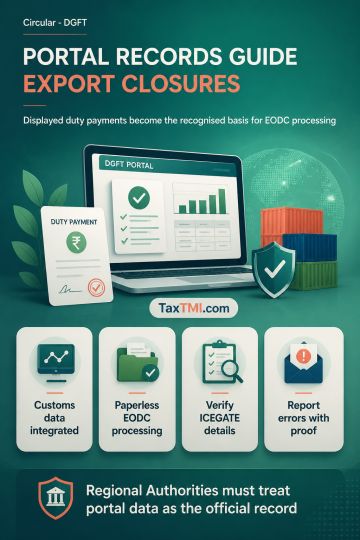
Inherited property sale proceeds require capital-gains treatment where ownership is supported by evidence, not suspicion or unverified signature doubt...
Cross-examination of retracted statements is essential where foundational evidence supports a benami allegation and documented funding explanations re...
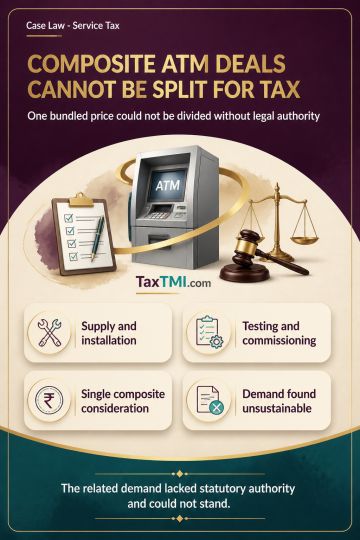
Capital-goods exemption covers plant-modernisation accessories, while the import restriction applies only to earlier capital-goods components and spar...
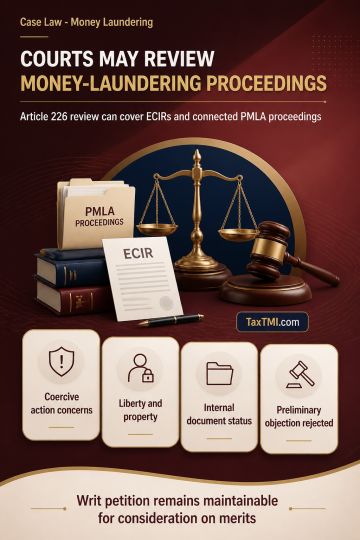
Constitutional judicial review permits challenges to ECIRs and connected money-laundering proceedings where coercive action affects fundamental intere...
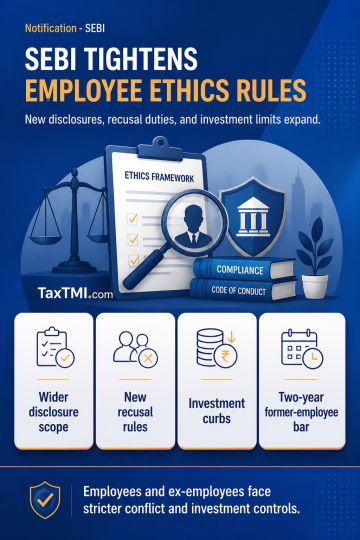
Employee conflict disclosures and investment restrictions expand with new recusal duties, post-employment limits, and compliance reporting requirements.
Contents
Summary
Note
Bookmark
Share
✓ Copied successfully !
Print
Print Options
For full text, please login
Login to TaxTMI
Verification Pending
The Email Id has not been verified. Click on the link we have sent on
SEBI's 2026 amendments tighten employee ethics, conflict-management, and investment restrictions by redefining dependents, family members, financial investments, non-permitted investments, professional interest, relational interest, and related concepts, thereby widening the disclosure and compliance framework. Employees must disclose future employment negotiations, specified family, relative, property, liability, and investment details to the Office of Ethics and Compliance at joining, exit, and on prescribed changes and transactions. Fresh investment by employees and their family members in non-permitted investments is barred during service, subject to limited exceptions, transitional options for pre-existing holdings, and a concentration cap for certain pooled investment products. A new recusal framework requires withdrawal from matters involving conflicted relationships, material interests, or likely bias, and former employees face a two-year restriction on appearing before or against SEBI in covered matters.
SEBI's 2026 amendments tighten employee ethics, conflict-management, and investment restrictions by redefining dependents, family members, financial investments, non-permitted investments, professional interest, relational interest, and related concepts, thereby widening the disclosure and compliance framework. Employees must disclose future employment negotiations, specified family, relative, property, liability, and investment details to the Office of Ethics and Compliance at joining, exit, and on prescribed changes and transactions. Fresh investment by employees and their family members in non-permitted investments is barred during service, subject to limited exceptions, transitional options for pre-existing holdings, and a concentration cap for certain pooled investment products. A new recusal framework requires withdrawal from matters involving conflicted relationships, material interests, or likely bias, and former employees face a two-year restriction on appearing before or against SEBI in covered matters.
Note: It is a system-generated summary and is for quick reference only.
 TaxTMI
 of 4792











 Join Channel


 TaxTMI