Admissibility of electronic evidence bars undervaluation demands where printouts, retracted statements and no cross-examination leave the case unprove...
Limitation in oppression and mismanagement proceedings: prior knowledge of removal and dilution barred the challenge, with valuation directions upheld...
Insolvency professional agency governance rules amended to add nominee directors, tighten independent director eligibility, and regulate managing dire...
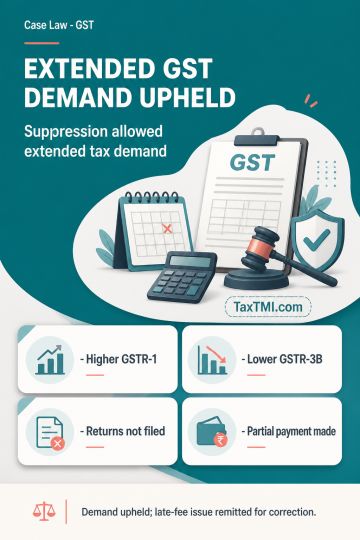
Extended limitation under GST was upheld where the assessee had disclosed higher taxable turnover in GSTR-1 but restricted liability in GSTR-3B for part of the year, then failed to file returns for the later period and made only partial payment after inspection. Applying the lower threshold for invoking Section 74 under GST, the HC held that the record was sufficient to infer suppression of turnover and non-payment of tax, so the extended period and consequent demand were valid. On the separate issue of late fee for non-filing of the annual return, the Court found an inconsistency between Defect No.10 and the revenue abstract and remitted the matter only for a corrigendum correcting that limited aspect.
Extended limitation under GST was upheld where the assessee had disclosed higher taxable turnover in GSTR-1 but restricted liability in GSTR-3B for part of the year, then failed to file returns for the later period and made only partial payment after inspection. Applying the lower threshold for invoking Section 74 under GST, the HC held that the record was sufficient to infer suppression of turnover and non-payment of tax, so the extended period and consequent demand were valid. On the separate issue of late fee for non-filing of the annual return, the Court found an inconsistency between Defect No.10 and the revenue abstract and remitted the matter only for a corrigendum correcting that limited aspect.
Note: It is a system-generated summary and is for quick reference only.
 TaxTMI
  TaxTMI
 of 4811


 Join Channel