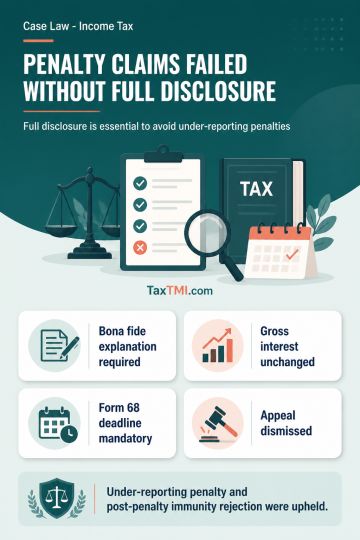
Bona fide disclosure requirements govern under-reporting penalties, and post-penalty immunity applications cannot secure available statutory protectio...
Certificate-of-origin verification procedure governs preferential customs benefits; denial without retroactive verification was set aside with consequ...
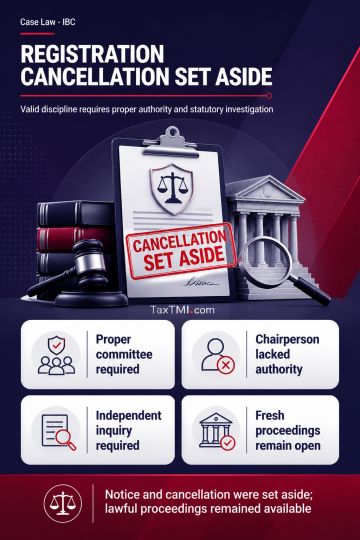
Disciplinary Committee jurisdiction and mandatory investigation requirements invalidated cancellation of an insolvency professional's registration and...
Retention of seized property survives where recorded reasons support proceeds of crime, while stayed investigation periods are excluded from limitatio...
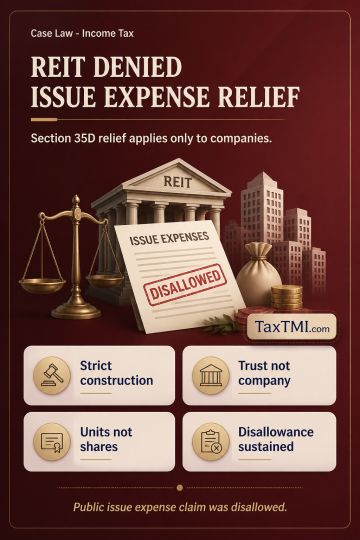
Section 35D(2)(c) was held to allow deduction only to a company for expenditure connected with public subscription of its shares or debentures. The Tribunal applied strict construction and refused to extend that relief to a REIT constituted as a trust, since a business trust is neither a company nor deemed to be one under the Act. It further held that REIT units are legally distinct from shares or debentures, and their regulatory treatment under SEBI norms does not change that character for section 35D(2)(c). The disallowance of the public issue expense claim was therefore sustained.
Section 35D(2)(c) was held to allow deduction only to a company for expenditure connected with public subscription of its shares or debentures. The Tribunal applied strict construction and refused to extend that relief to a REIT constituted as a trust, since a business trust is neither a company nor deemed to be one under the Act. It further held that REIT units are legally distinct from shares or debentures, and their regulatory treatment under SEBI norms does not change that character for section 35D(2)(c). The disallowance of the public issue expense claim was therefore sustained.
Note: It is a system-generated summary and is for quick reference only.
 TaxTMI
 of 4782








 Join Channel


 TaxTMI