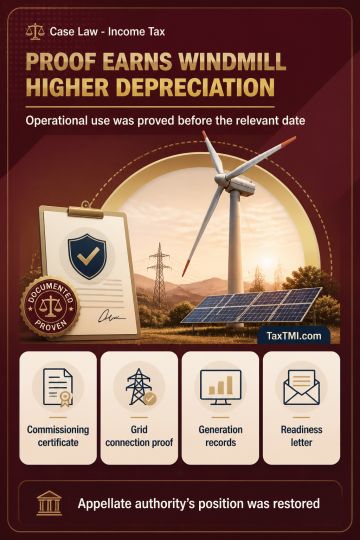
Windmill commissioning evidence supported higher depreciation where grid connection and electricity generation proved operational use before the relev...
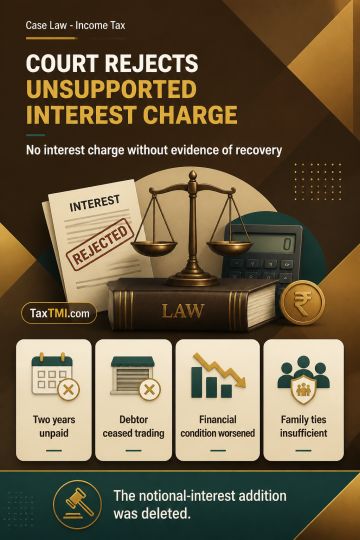
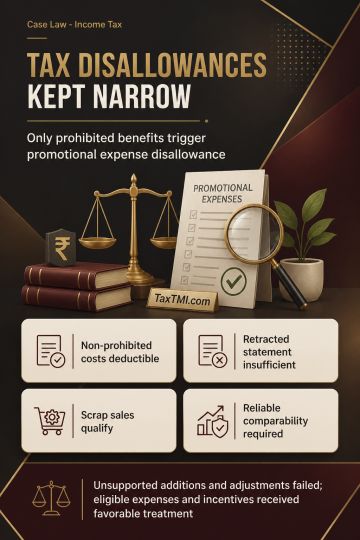
Pharmaceutical promotion and transfer-pricing comparability principles limited disallowances, while uncorroborated search allegations and unsupported ...
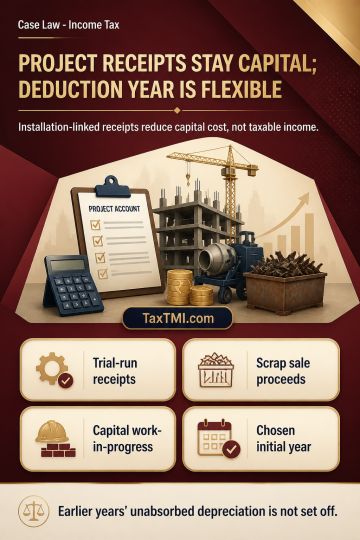
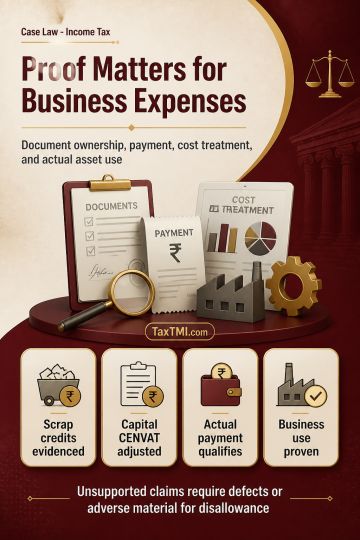
Business expenditure substantiation supports scrap credits, statutory payments and expense claims, while depreciation requires proof of actual busines...
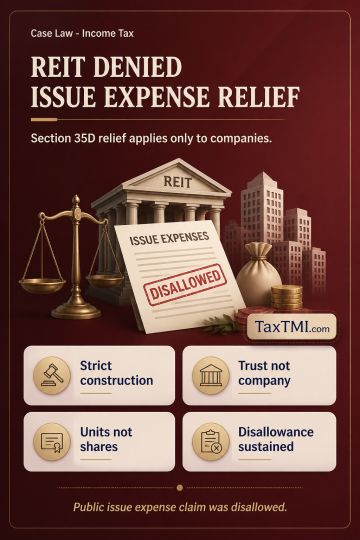
Section 35D(2)(c) was held to allow deduction only to a company for expenditure connected with public subscription of its shares or debentures. The Tribunal applied strict construction and refused to extend that relief to a REIT constituted as a trust, since a business trust is neither a company nor deemed to be one under the Act. It further held that REIT units are legally distinct from shares or debentures, and their regulatory treatment under SEBI norms does not change that character for section 35D(2)(c). The disallowance of the public issue expense claim was therefore sustained.
Section 35D(2)(c) was held to allow deduction only to a company for expenditure connected with public subscription of its shares or debentures. The Tribunal applied strict construction and refused to extend that relief to a REIT constituted as a trust, since a business trust is neither a company nor deemed to be one under the Act. It further held that REIT units are legally distinct from shares or debentures, and their regulatory treatment under SEBI norms does not change that character for section 35D(2)(c). The disallowance of the public issue expense claim was therefore sustained.
Note: It is a system-generated summary and is for quick reference only.
 TaxTMI
 of 4788





 Join Channel


 TaxTMI
