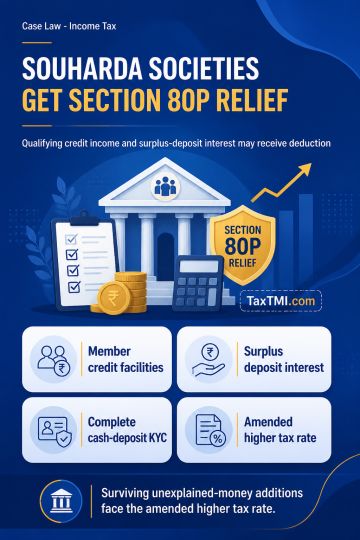
Section 80P deduction covers Souharda credit societies, including qualifying surplus-deposit interest, subject to member KYC verification for cash dep...
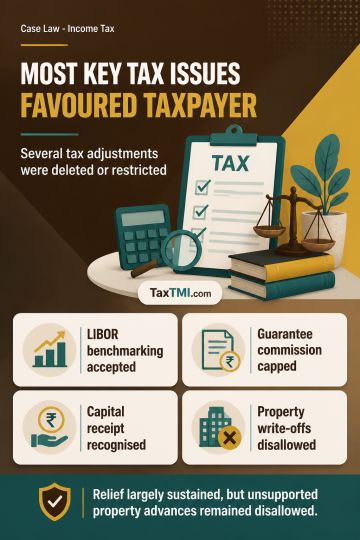
Transfer-pricing benchmarking and capital-receipt principles sustained taxpayer relief, while unsupported property-advance write-offs remained disallo...
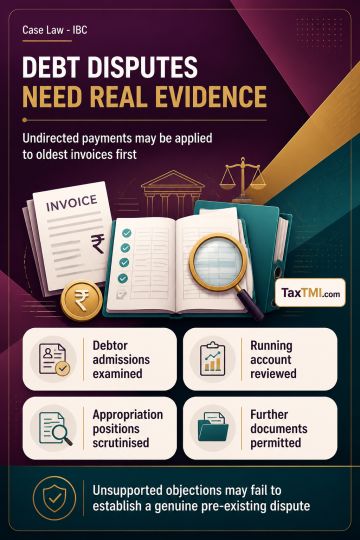
Pre-existing operational debt disputes require genuine evidence, while undirected running-account payments may be appropriated on a first-in-first-out...
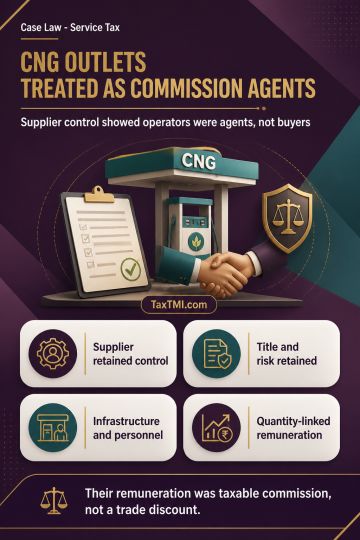
Agency in CNG distribution makes outlet operators commission agents, rendering taxable Business Auxiliary Service rather than purchasing goods for res...
Page of 4786
Press 'Enter' after typing page number.
661 to 680 of 95714 Results
❮
❯
❯❯
0 / 200
Expand Note
Add to Folder
No Folders have been created
+
Are you sure you want to delete "My most important" ?
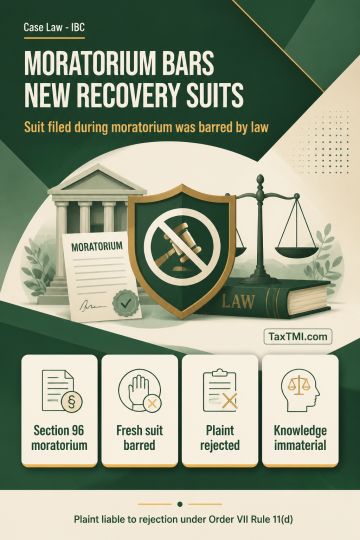
Section 96 of the Insolvency and Bankruptcy Code creates an interim moratorium from the filing of an application under Sections 94 or 95 until admission, staying pending debt proceedings and barring fresh legal action on the debt during that period. A money recovery suit filed while that embargo operated was therefore barred by law and liable to rejection under Order VII Rule 11(d). The later insertion of Section 96(4) did not cure an earlier filing, and lack of knowledge of the insolvency proceedings was immaterial because the bar operated by statute. The plaint could not be split against some defendants on a joint and several liability theory once the statutory prohibition applied.
Section 96 of the Insolvency and Bankruptcy Code creates an interim moratorium from the filing of an application under Sections 94 or 95 until admission, staying pending debt proceedings and barring fresh legal action on the debt during that period. A money recovery suit filed while that embargo operated was therefore barred by law and liable to rejection under Order VII Rule 11(d). The later insertion of Section 96(4) did not cure an earlier filing, and lack of knowledge of the insolvency proceedings was immaterial because the bar operated by statute. The plaint could not be split against some defendants on a joint and several liability theory once the statutory prohibition applied.
Note: It is a system-generated summary and is for quick reference only.
 TaxTMI
 of 4786





 Join Channel


 TaxTMI