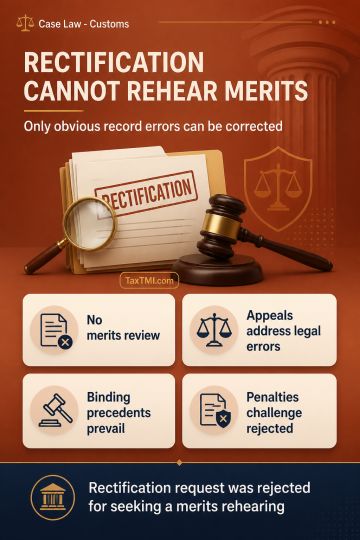
Rectification of mistake remains limited to self-evident record errors, preventing merits review through miscellaneous applications and preserving fin...
Tender creditworthiness conditions may extend to de facto Promoter Directors, with post-participation challenges generally barred absent arbitrariness...
Corporate representation in PMLA summons proceedings permitted through an authorised signatory, subject to directors' continuing cooperation and atten...
Helicopter charter classification requires effective control analysis, while territorial performance, reasoned credit orders and wilful suppression de...
Specified fund definition expands PAN exemption eligibility for registered alternative investment funds and qualifying International Financial Service...
Tax exemption for specified legal-services authority income applies retrospectively, subject to non-commercial activity, unchanged income sources, and...
At the attachment stage under PMLA, the Tribunal applied preponderance of probabilities and held that bank trail material, statements of the persons concerned, the cash book and RTGS/NEFT records were sufficient to show receipt of proceeds of crime by the appellant; minor discrepancies in the cash figures did not destroy the evidentiary value, and final culpability was left to the pending prosecution complaint. It also held that property acquired before the crime period remained liable to equivalent value attachment where direct proceeds were no longer available, since no bar flows from the definition of proceeds of crime. Attachment was treated as a protective measure, and the appeal was dismissed.
At the attachment stage under PMLA, the Tribunal applied preponderance of probabilities and held that bank trail material, statements of the persons concerned, the cash book and RTGS/NEFT records were sufficient to show receipt of proceeds of crime by the appellant; minor discrepancies in the cash figures did not destroy the evidentiary value, and final culpability was left to the pending prosecution complaint. It also held that property acquired before the crime period remained liable to equivalent value attachment where direct proceeds were no longer available, since no bar flows from the definition of proceeds of crime. Attachment was treated as a protective measure, and the appeal was dismissed.
Note: It is a system-generated summary and is for quick reference only.
 TaxTMI
 of 4788



















 Join Channel



 TaxTMI