Development agreements require legal possession or effective enjoyment for capital gains transfer; permissive possession and deferred consideration de...
Prolonged sterilisation of development rights supports capital-gains treatment, while business-income disallowances cannot govern capital-gains comput...
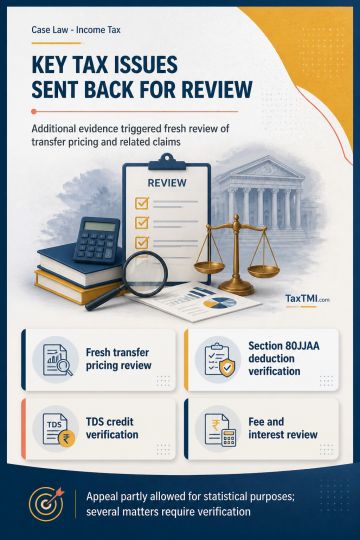
Additional evidence in transfer pricing dispute leads to fresh examination, while tax deductions, TDS credit, fee and refund interest require verifica...
Category II AIF pass-through taxation preserves non-business income character; investment receipts cannot be reclassified without applying recognised ...
Mutual fund maturity rules require proper rollover, redemption, disclosure, and due diligence; investor gains cannot excuse regulatory breaches or pen...
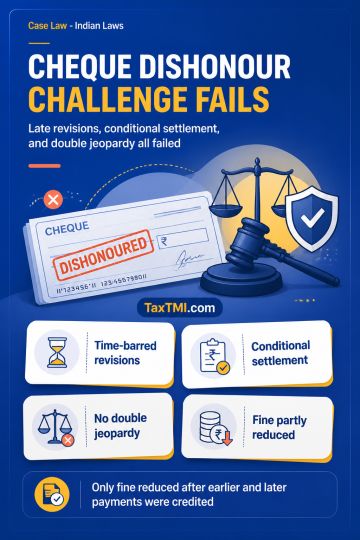
Extraordinary delay in filing revisions was not condoned because the explanation of wrong legal advice and bona fide misconception was contrary to the record and did not satisfy "sufficient cause"; the revisions against conviction were dismissed as time-barred. The settlement agreement did not extinguish the pending Section 138 complaints because withdrawal was expressly conditional on full payment, and default kept the complainant's right to proceed alive; quashing was refused. Civil execution and criminal cheque-dishonour proceedings were held to operate in distinct fields, so double jeopardy did not apply and probation was declined. Earlier and later payments were credited while computing liability, leading only to a limited reduction in fine.
Extraordinary delay in filing revisions was not condoned because the explanation of wrong legal advice and bona fide misconception was contrary to the record and did not satisfy "sufficient cause"; the revisions against conviction were dismissed as time-barred. The settlement agreement did not extinguish the pending Section 138 complaints because withdrawal was expressly conditional on full payment, and default kept the complainant's right to proceed alive; quashing was refused. Civil execution and criminal cheque-dishonour proceedings were held to operate in distinct fields, so double jeopardy did not apply and probation was declined. Earlier and later payments were credited while computing liability, leading only to a limited reduction in fine.
Note: It is a system-generated summary and is for quick reference only.
 TaxTMI
 of 4782















 Join Channel


 TaxTMI