Statutory transfer formalities invalidated alleged share and property transfers, while retrospective record manipulation constituted oppression and mi...
Provisional attachment of laundered funds and equivalent-value property sustained, with statutory protection limited to pension, gratuity and providen...
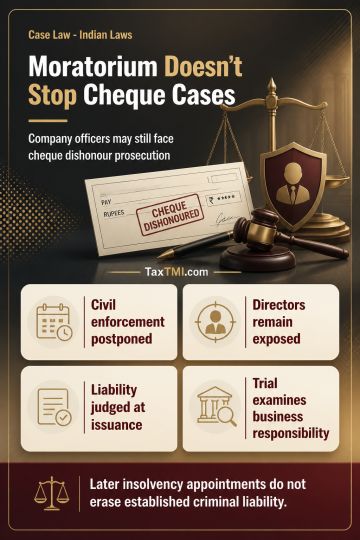
Insolvency moratorium does not shield company officers from cheque dishonour prosecution for liability arising before corporate insolvency proceedings...
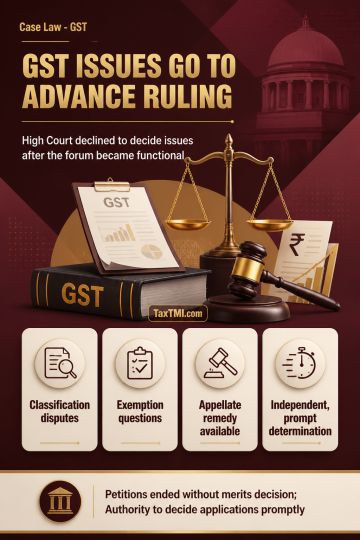
Advance-ruling mechanism governs pending GST classification, exemption and taxability disputes, limiting writ review once the specialised forum functi...
Page of 4788
Press 'Enter' after typing page number.
581 to 600 of 95752 Results
❮
❯
❯❯
0 / 200
Expand Note
Add to Folder
No Folders have been created
+
Are you sure you want to delete "My most important" ?
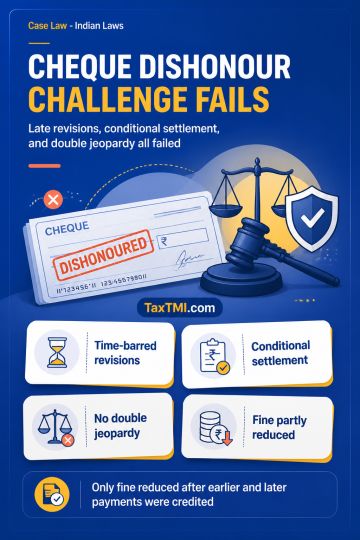
Extraordinary delay in filing revisions was not condoned because the explanation of wrong legal advice and bona fide misconception was contrary to the record and did not satisfy "sufficient cause"; the revisions against conviction were dismissed as time-barred. The settlement agreement did not extinguish the pending Section 138 complaints because withdrawal was expressly conditional on full payment, and default kept the complainant's right to proceed alive; quashing was refused. Civil execution and criminal cheque-dishonour proceedings were held to operate in distinct fields, so double jeopardy did not apply and probation was declined. Earlier and later payments were credited while computing liability, leading only to a limited reduction in fine.
Extraordinary delay in filing revisions was not condoned because the explanation of wrong legal advice and bona fide misconception was contrary to the record and did not satisfy "sufficient cause"; the revisions against conviction were dismissed as time-barred. The settlement agreement did not extinguish the pending Section 138 complaints because withdrawal was expressly conditional on full payment, and default kept the complainant's right to proceed alive; quashing was refused. Civil execution and criminal cheque-dishonour proceedings were held to operate in distinct fields, so double jeopardy did not apply and probation was declined. Earlier and later payments were credited while computing liability, leading only to a limited reduction in fine.
Note: It is a system-generated summary and is for quick reference only.
 TaxTMI
 of 4788















 Join Channel


 TaxTMI