Online bond platforms may offer overseas-regulated products and tax-specific bonds subject to disclosures, compliance safeguards and revised complianc...
Corporate guarantee valuation permits actual ascertainable commission while barring retroactive application and extended-period penalties for bona fid...
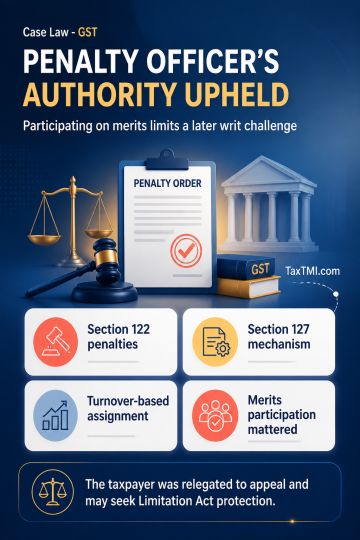
Proper-officer jurisdiction under UPGST penalty provisions upheld; participation on merits prevents bypassing the statutory appellate remedy through w...
Transitioned CENVAT credit may validly satisfy mandatory pre-deposit requirements for legacy service tax appeals through Electronic Credit Ledger debi...
Building-plan sanction charges require statutory authority; unauthorised fees and GST were quashed, while labour cess must follow prescribed collectio...
Pure-agent exclusion fails where hotel booking facilitators receive third-party services themselves, making entire customer consideration taxable as r...
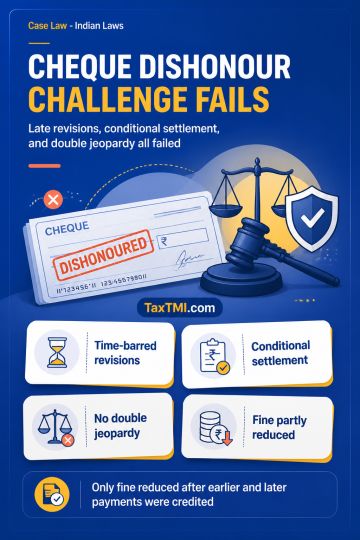
Extraordinary delay in filing revisions was not condoned because the explanation of wrong legal advice and bona fide misconception was contrary to the record and did not satisfy "sufficient cause"; the revisions against conviction were dismissed as time-barred. The settlement agreement did not extinguish the pending Section 138 complaints because withdrawal was expressly conditional on full payment, and default kept the complainant's right to proceed alive; quashing was refused. Civil execution and criminal cheque-dishonour proceedings were held to operate in distinct fields, so double jeopardy did not apply and probation was declined. Earlier and later payments were credited while computing liability, leading only to a limited reduction in fine.
Extraordinary delay in filing revisions was not condoned because the explanation of wrong legal advice and bona fide misconception was contrary to the record and did not satisfy "sufficient cause"; the revisions against conviction were dismissed as time-barred. The settlement agreement did not extinguish the pending Section 138 complaints because withdrawal was expressly conditional on full payment, and default kept the complainant's right to proceed alive; quashing was refused. Civil execution and criminal cheque-dishonour proceedings were held to operate in distinct fields, so double jeopardy did not apply and probation was declined. Earlier and later payments were credited while computing liability, leading only to a limited reduction in fine.
Note: It is a system-generated summary and is for quick reference only.
 TaxTMI














 Join Channel


 TaxTMI

