Business expenditure deduction requires proof of genuine commission payments and commercial allowability; turnover growth alone cannot validate the cl...
Article 8 treaty coverage excluded third-party airline support services, while documented demonetisation cash receipts remained accepted business inco...
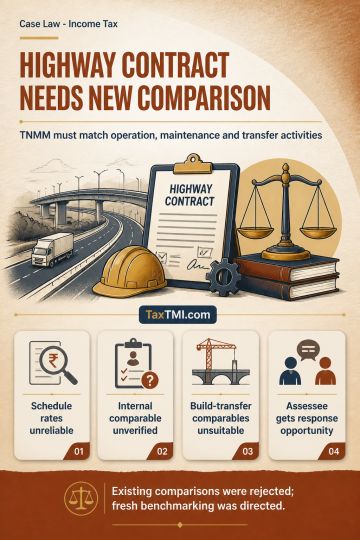
Functional comparability under TNMM requires highway contract benchmarks to reflect operation, maintenance and transfer activities, requiring fresh be...
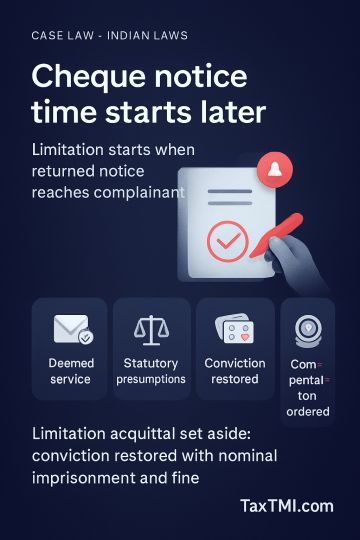
In cheque dishonour matters, where a statutory demand notice is returned refused or unclaimed, limitation for a complaint runs from deemed service, meaning the date the complainant receives the returned cover or is informed by postal authorities, not the earlier postal endorsement. The text also reiterates that proof of the transaction and execution of the cheque attracts statutory presumptions as to liability, which can sustain conviction if not rebutted. Applying these principles, the limitation-based acquittal was set aside, the conviction was restored, and the sentence was modified to nominal imprisonment with fine, the substantial amount directed as compensation to the complainant.
In cheque dishonour matters, where a statutory demand notice is returned refused or unclaimed, limitation for a complaint runs from deemed service, meaning the date the complainant receives the returned cover or is informed by postal authorities, not the earlier postal endorsement. The text also reiterates that proof of the transaction and execution of the cheque attracts statutory presumptions as to liability, which can sustain conviction if not rebutted. Applying these principles, the limitation-based acquittal was set aside, the conviction was restored, and the sentence was modified to nominal imprisonment with fine, the substantial amount directed as compensation to the complainant.
Note: It is a system-generated summary and is for quick reference only.
 TaxTMI
 of 4792












 Join Channel


 TaxTMI
