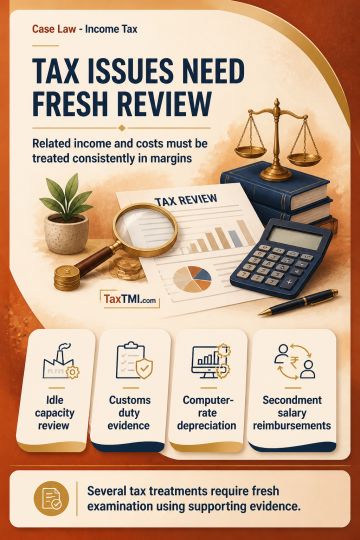
Transfer pricing margin adjustments require matching treatment of non-operating income and related costs, with comparability issues reconsidered on ev...
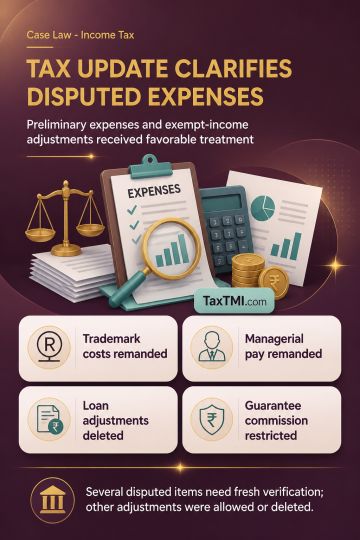
Preliminary-expense amortisation and MAT exempt-income adjustments prevailed, while trademark costs and managerial remuneration require fresh verifica...
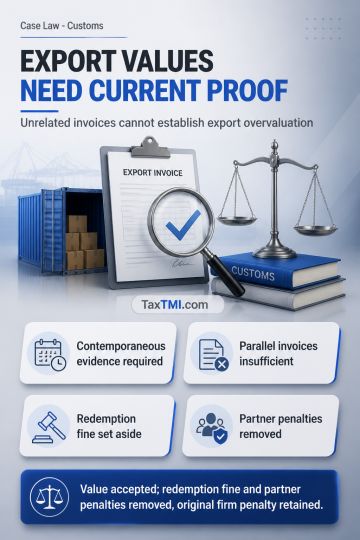
Export valuation requires contemporaneous evidence; unrelated invoices cannot prove overvaluation, and dual penalties on firm and partner are impermis...
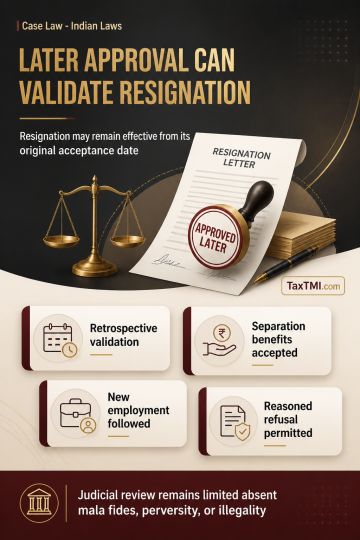
Ratification of resignation acceptance validates separation retrospectively, while withdrawal may be refused through reasoned administrative discretio...
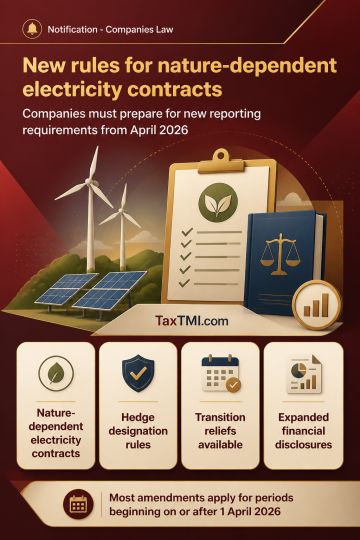
Nature-dependent electricity contracts receive new Ind AS accounting, hedge designation, transition and financial-statement disclosure requirements fr...
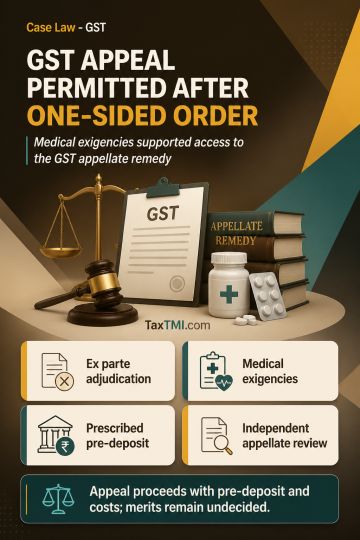
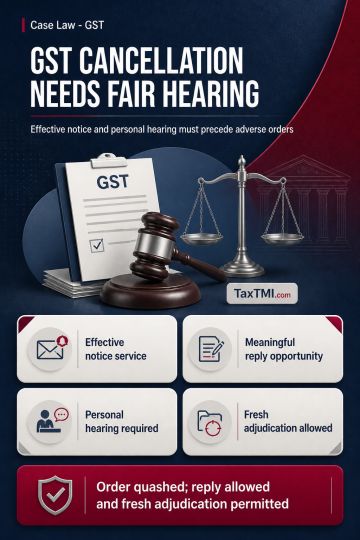
Alternative GST remedy permitted protective writ intervention for ex parte adjudication, preserving independent appellate review of input tax credit d...
Page of 4811
Press 'Enter' after typing page number.
361 to 380 of 96208 Results
❮
❯
❯❯
0 / 200
Expand Note
Add to Folder
No Folders have been created
+
Are you sure you want to delete "My most important" ?
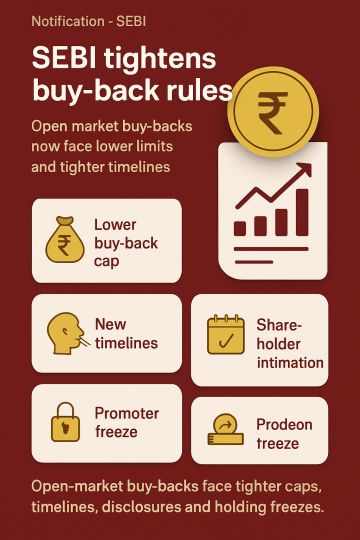
SEBI amended the Buy-Back of Securities Regulations, 2018 to tighten open market buy-back conditions and timelines. From 1 August 2026, open market buy-back through stock exchange must be below 15% of paid-up capital and free reserves, assessed on standalone and consolidated financials, and a company may not propose buy-back that breaches minimum public shareholding norms. The amendments also prescribe fresh announcement, opening and closing timelines, require electronic intimation to existing shareholders, freeze promoter and promoter group holdings at ISIN level during the offer period, and make merchant banker appointment discretionary, with specified compliance duties shifting to the company and other named intermediaries.
SEBI amended the Buy-Back of Securities Regulations, 2018 to tighten open market buy-back conditions and timelines. From 1 August 2026, open market buy-back through stock exchange must be below 15% of paid-up capital and free reserves, assessed on standalone and consolidated financials, and a company may not propose buy-back that breaches minimum public shareholding norms. The amendments also prescribe fresh announcement, opening and closing timelines, require electronic intimation to existing shareholders, freeze promoter and promoter group holdings at ISIN level during the offer period, and make merchant banker appointment discretionary, with specified compliance duties shifting to the company and other named intermediaries.
Note: It is a system-generated summary and is for quick reference only.
 TaxTMI
  TaxTMI
 of 4811




 Join Channel