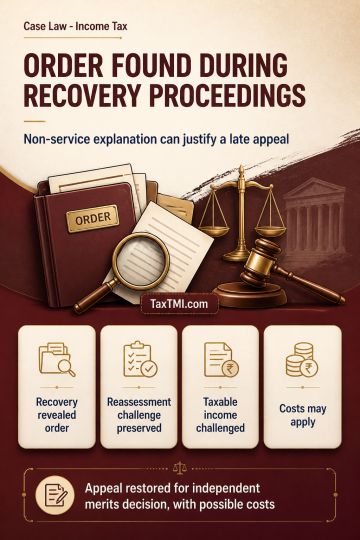
Condonation of delay permits statutory appeal restoration where inadequate service explanation prevented consideration of reassessment and taxable-inc...
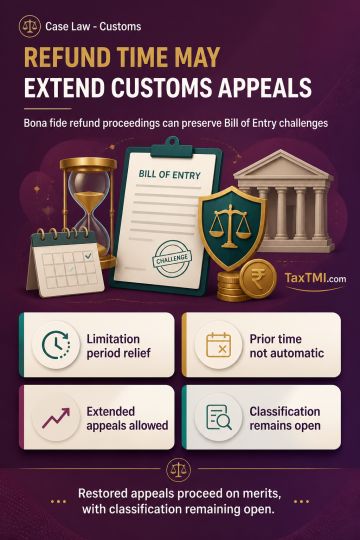
Limitation in customs appeals permits exclusion for bona fide refund proceedings, enabling restoration of Bill of Entry assessment challenges on merit...
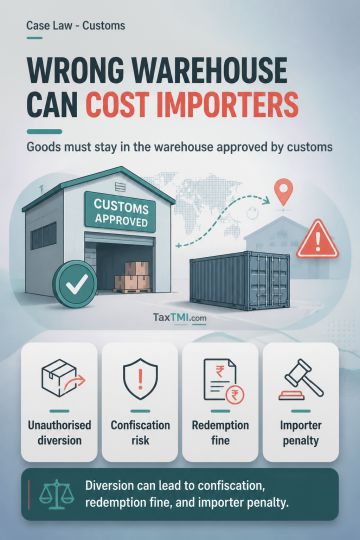
Warehousing permission requires deposit at the designated bonded warehouse; unauthorised diversion triggers confiscation, redemption fine and importer...
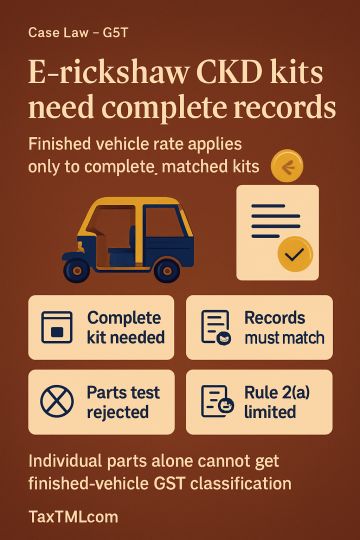
E-rickshaw supplies in CKD/SKD form qualify for GST treatment as the finished electrically operated vehicle only when all components needed to assemble a complete vehicle are supplied together as one identifiable kit or package, and the consignment contents and contemporaneous commercial records consistently match that description. The AAAR rejected the motor-plus-three-components test because it does not arise from Rule 2(a), the tariff, or the rate notification, and held that individual parts cannot be classified as the finished vehicle merely because some are essential components. It also noted that customs interpretative fiction under Rule 2(a) has a limited scope and cannot be extended beyond customs classification.
E-rickshaw supplies in CKD/SKD form qualify for GST treatment as the finished electrically operated vehicle only when all components needed to assemble a complete vehicle are supplied together as one identifiable kit or package, and the consignment contents and contemporaneous commercial records consistently match that description. The AAAR rejected the motor-plus-three-components test because it does not arise from Rule 2(a), the tariff, or the rate notification, and held that individual parts cannot be classified as the finished vehicle merely because some are essential components. It also noted that customs interpretative fiction under Rule 2(a) has a limited scope and cannot be extended beyond customs classification.
Note: It is a system-generated summary and is for quick reference only.
 TaxTMI
 of 4796



 Join Channel


 TaxTMI