Trademark depreciation and section 14A adjustments: ITAT applies consistency, independent book-profit computation, and no disallowance without exempt ...
Rebuttable search presumptions and corroboration standards shaped deletion of unsubstantiated additions, while rental income and limited profit estima...
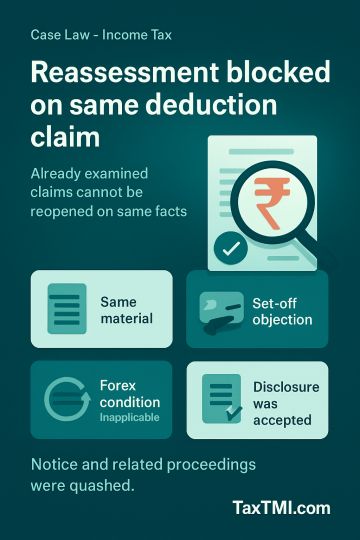
A reassessment cannot be sustained where the deduction claim was specifically examined and accepted in the original scrutiny assessment, because reopening on the same material is a mere change of opinion, even within four years. The recorded reasons also failed on merits: the proposed set-off of ineligible-unit losses before allowing the deduction was contrary to the Supreme Court's ruling in Yokogawa India Ltd., the foreign-exchange realisation condition was not applicable for the relevant year, and the objection that the claim was not made in the designated schedule was untenable because the claim was disclosed and explained during assessment. The notice, objection order, draft assessment order and consequential proceedings were quashed.
A reassessment cannot be sustained where the deduction claim was specifically examined and accepted in the original scrutiny assessment, because reopening on the same material is a mere change of opinion, even within four years. The recorded reasons also failed on merits: the proposed set-off of ineligible-unit losses before allowing the deduction was contrary to the Supreme Court's ruling in Yokogawa India Ltd., the foreign-exchange realisation condition was not applicable for the relevant year, and the objection that the claim was not made in the designated schedule was untenable because the claim was disclosed and explained during assessment. The notice, objection order, draft assessment order and consequential proceedings were quashed.
Note: It is a system-generated summary and is for quick reference only.
 TaxTMI
  TaxTMI
 of 4817


 Join Channel