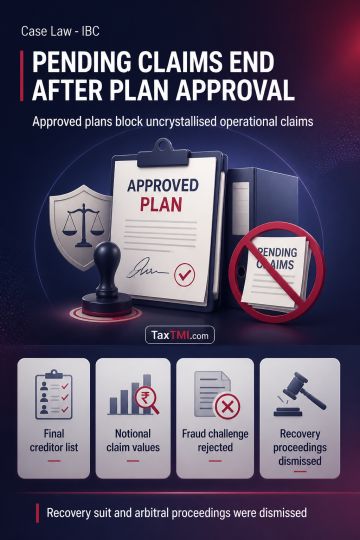
Clean slate principle extinguishes uncrystallised operational claims and bars continuation of pending recovery and arbitral proceedings after plan app...
Works contract classification governs composite layout-development contracts where VAT-paid goods are transferred alongside construction and infrastru...
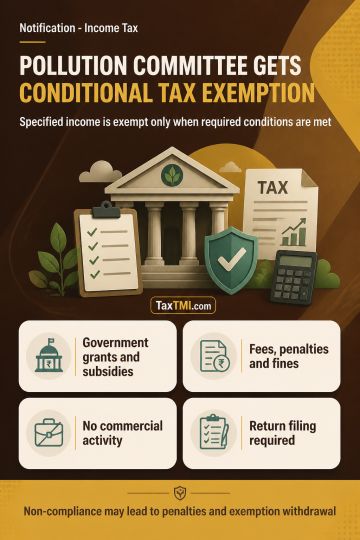
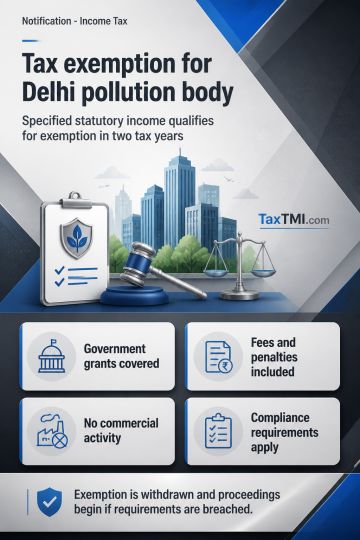
Specified income tax exemption for pollution control body remains conditional on non-commercial activity, unchanged income character, and return filin...
Jurisdictional facts in certificate-of-origin discrepancies can support customs show-cause proceedings, leaving factual explanations for departmental ...
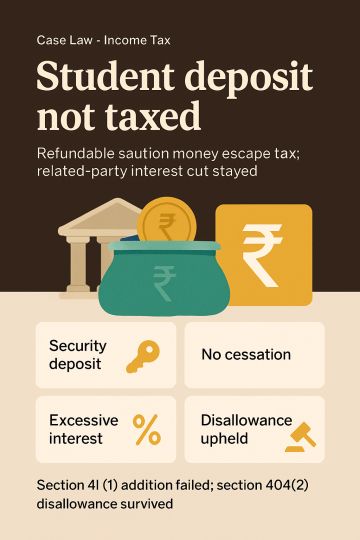
Unclaimed student caution money held by a charitable trust was treated as a refundable security deposit and not as a trading liability or an amount on which deduction had earlier been allowed. As the amount was neither forfeited nor written back and the trust continued to recognise it in its books, there was no remission or cessation of liability; mere lapse of time did not extinguish the debt, so the addition under section 41(1) failed. On interest paid to specified persons, the Tribunal upheld the finding that the rate was excessive, and the surviving disallowance under section 40A(2) was sustained.
Unclaimed student caution money held by a charitable trust was treated as a refundable security deposit and not as a trading liability or an amount on which deduction had earlier been allowed. As the amount was neither forfeited nor written back and the trust continued to recognise it in its books, there was no remission or cessation of liability; mere lapse of time did not extinguish the debt, so the addition under section 41(1) failed. On interest paid to specified persons, the Tribunal upheld the finding that the rate was excessive, and the surviving disallowance under section 40A(2) was sustained.
Note: It is a system-generated summary and is for quick reference only.
 TaxTMI
 of 4786







 Join Channel


 TaxTMI