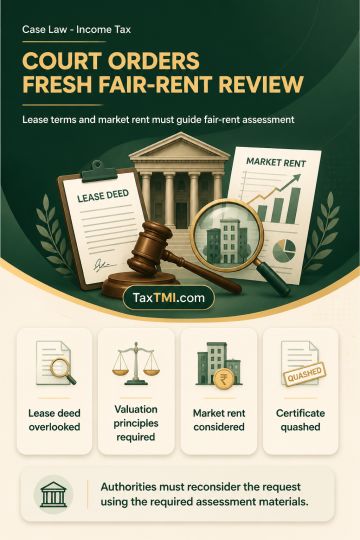
Fair-rent assessment requires consideration of lease terms, valuation principles and prevailing market rent; the certificate was quashed for fresh rev...
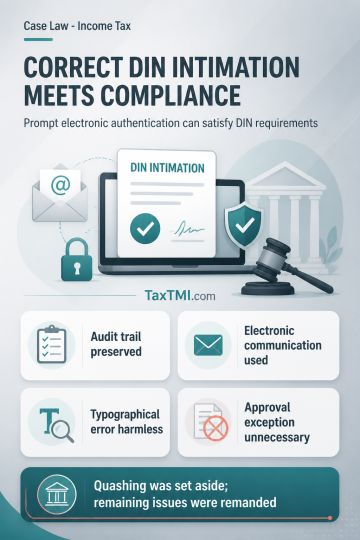
Document Identification Number compliance is satisfied when electronically communicated orders are promptly authenticated through a correctly identifi...
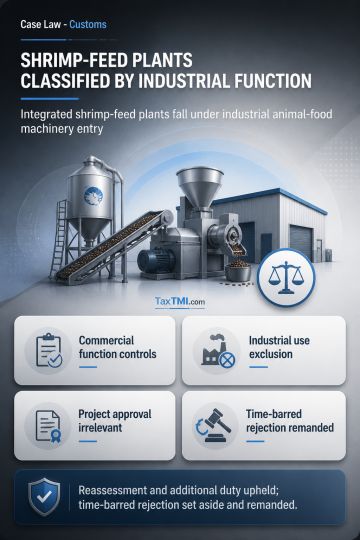
Industrial shrimp-feed machinery classification follows its commercial function, placing integrated production plants under the specific industrial fo...
Exemption for services relating to conduct of examination was...
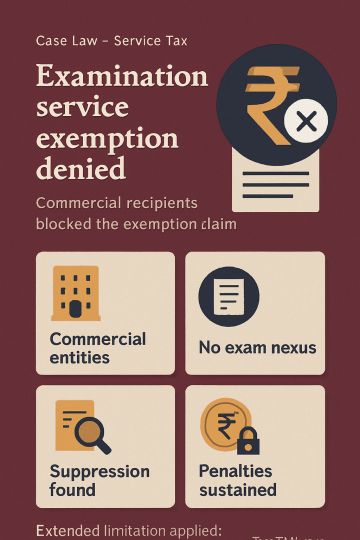
Exemption for examination-related services rejected where recipients were commercial entities; suppression sustained extended limitation and penalties.
Contents
Summary
Note
Bookmark
Share
✓ Copied successfully !
Print
Print Options
For full text, please login
Login to TaxTMI
Verification Pending
The Email Id has not been verified. Click on the link we have sent on
Exemption for services relating to conduct of examination was denied because the agreements showed the work was rendered to commercial entities, not to an educational institution. Services for a computer-based training module and assessment activities had no nexus with admission to, or conduct of examination by, an educational institution, and one agreement expressly contemplated payment of service tax, undermining the claim of bona fide exemption. The extended period of limitation was upheld because the appellant failed to disclose records and did not produce agreements despite summons, amounting to suppression of facts. Penalties and interest were also sustained as consequential liabilities.
Exemption for services relating to conduct of examination was denied because the agreements showed the work was rendered to commercial entities, not to an educational institution. Services for a computer-based training module and assessment activities had no nexus with admission to, or conduct of examination by, an educational institution, and one agreement expressly contemplated payment of service tax, undermining the claim of bona fide exemption. The extended period of limitation was upheld because the appellant failed to disclose records and did not produce agreements despite summons, amounting to suppression of facts. Penalties and interest were also sustained as consequential liabilities.
Note: It is a system-generated summary and is for quick reference only.
 TaxTMI
 of 4784





 Join Channel


 TaxTMI
