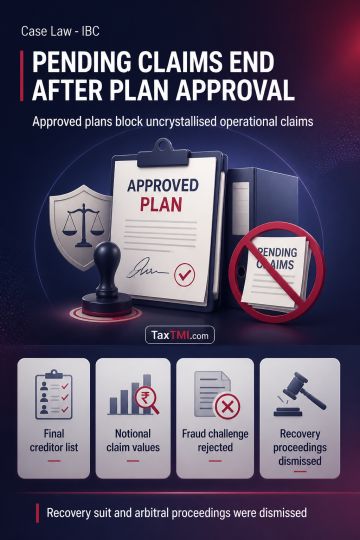
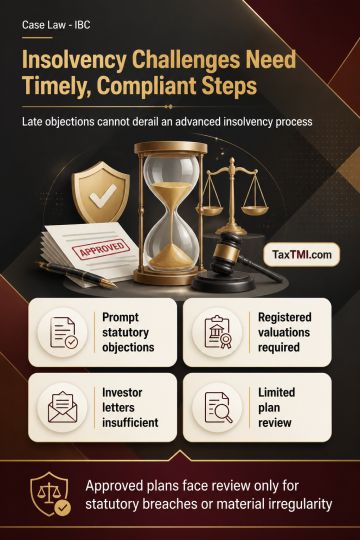
Clean slate principle extinguishes uncrystallised operational claims and bars continuation of pending recovery and arbitral proceedings after plan app...
Works contract classification governs composite layout-development contracts where VAT-paid goods are transferred alongside construction and infrastru...
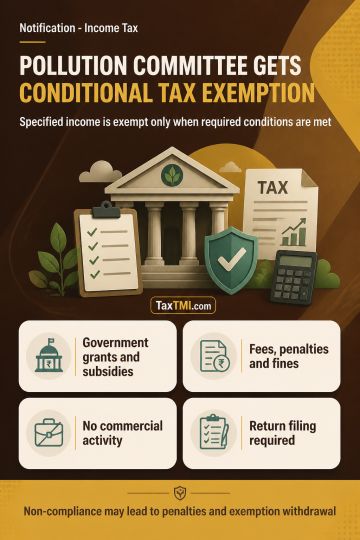
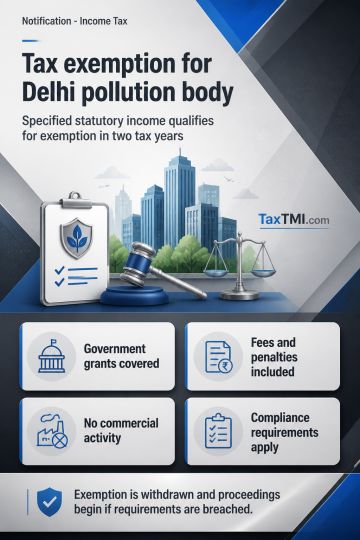
Specified income tax exemption for pollution control body remains conditional on non-commercial activity, unchanged income character, and return filin...
Jurisdictional facts in certificate-of-origin discrepancies can support customs show-cause proceedings, leaving factual explanations for departmental ...
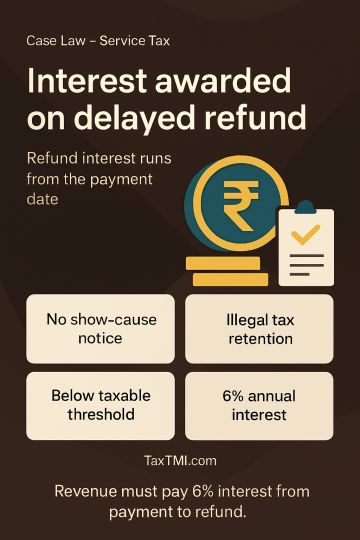
Tax retained without a show cause notice was treated as illegal ab initio, because the amount had been paid only on departmental direction and no lawful demand or appropriation ever existed. The Tribunal also accepted that the assessee's annual receipts were below the taxable threshold, so no service tax was payable in the first place, and the earlier refusal of refund could not be sustained. Applying Supreme Court principles on delayed refunds, it held that statutory interest could not be postponed to the later refund order and directed interest at 6% per annum from the date of payment until refund, with the Revenue to compute and pay it.
Tax retained without a show cause notice was treated as illegal ab initio, because the amount had been paid only on departmental direction and no lawful demand or appropriation ever existed. The Tribunal also accepted that the assessee's annual receipts were below the taxable threshold, so no service tax was payable in the first place, and the earlier refusal of refund could not be sustained. Applying Supreme Court principles on delayed refunds, it held that statutory interest could not be postponed to the later refund order and directed interest at 6% per annum from the date of payment until refund, with the Revenue to compute and pay it.
Note: It is a system-generated summary and is for quick reference only.
 TaxTMI
 of 4786






 Join Channel


 TaxTMI