Inherited property sale proceeds require capital-gains treatment where ownership is supported by evidence, not suspicion or unverified signature doubt...
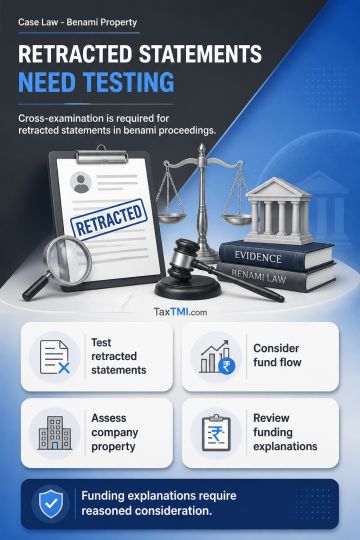
Cross-examination of retracted statements is essential where foundational evidence supports a benami allegation and documented funding explanations re...
Capital-goods exemption covers plant-modernisation accessories, while the import restriction applies only to earlier capital-goods components and spar...
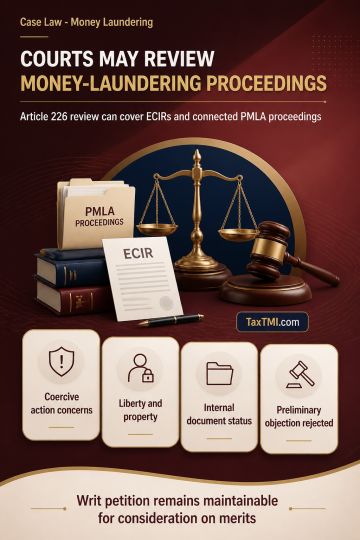
Constitutional judicial review permits challenges to ECIRs and connected money-laundering proceedings where coercive action affects fundamental intere...
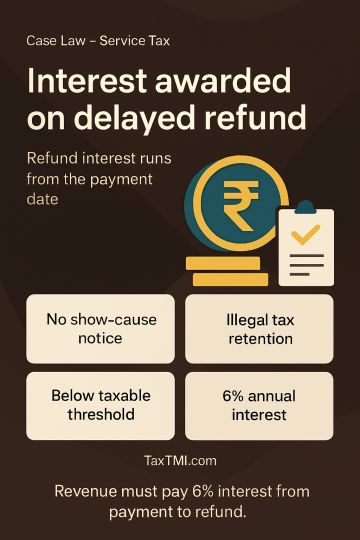
Tax retained without a show cause notice was treated as illegal ab initio, because the amount had been paid only on departmental direction and no lawful demand or appropriation ever existed. The Tribunal also accepted that the assessee's annual receipts were below the taxable threshold, so no service tax was payable in the first place, and the earlier refusal of refund could not be sustained. Applying Supreme Court principles on delayed refunds, it held that statutory interest could not be postponed to the later refund order and directed interest at 6% per annum from the date of payment until refund, with the Revenue to compute and pay it.
Tax retained without a show cause notice was treated as illegal ab initio, because the amount had been paid only on departmental direction and no lawful demand or appropriation ever existed. The Tribunal also accepted that the assessee's annual receipts were below the taxable threshold, so no service tax was payable in the first place, and the earlier refusal of refund could not be sustained. Applying Supreme Court principles on delayed refunds, it held that statutory interest could not be postponed to the later refund order and directed interest at 6% per annum from the date of payment until refund, with the Revenue to compute and pay it.
Note: It is a system-generated summary and is for quick reference only.
 TaxTMI
 of 4792













 Join Channel


 TaxTMI